Home » Jazz Musicians » Les Paul
Les Paul
Les Paul is a unique blend of musician and inventor. His performing career started at the age of 13 and by the early 1950s he was the greatest jazz guitarist of his generation. As an inventor, Les Paul's breakthrough creation of the solid-body electric guitar paved the way for electric music made the sound of rock and roll possible. In 1953 while performing with Bing Crosby, he perfected the first multi- track recording machine, allowing separate lines of instrumental music and vocals to be blended together. His many recording innovations--including sound-on-sound, overdubbing, reverb effects, and multi-tracking--greatly accelerated the advancement of studio recording. One of the most influential figures in the development of modern music-making, Les Paul developed an interest in both music and electronics very early in his life. Born in Waukesha, Wisconsin in 1915, by the age of nine he started teaching himself the guitar (having already tackled the harmonica and moved on from the piano and the banjo) and constructed his first crystal radio; within a year he had fabricated a primitive recording machine out of parts culled from a Cadillac and a dentist drill. By 13 he was performing semi-professionally as a country musician and began pursuing experiments to electrically amplify his instrument. Initial attempts involved the use of a record player needle, the earpiece from a telephone, and cannibalized radio components. Years later, the system was perfected with the replacement of the hollow guitar body with a solid block of wood: one of the earliest designs for what eventually came to be known as the solid body electric guitar. During his high school years Paul became a member of Rube Tronson's Cowboys, and shortly afterwards dropped out to work full-time with Wolverton's Radio Band on radio station KMOX in St. Louis. By the 1930s he had relocated to Chicago, where he began his recording career using the hillbilly persona of 'Rhubarb Red', maintaining at the same time a parallel career in jazz as Les Paul. His first trio was assembled in 1937, but the following year he moved to New York to work as a featured player on the radio broadcasts of Fred Waring's Pennsylvanians -- a job that was brought to an abrupt end in 1941 when he was nearly electrocuted during a session in his basement. On a more positive note, 1941 also saw the creation of the "The Log", the culmination of his efforts to create an electric guitar.
Read moreTags
Les Paul: How High The Moon: Hits & Rarities From The Wizard of Waukesha
by George Kanzler
His name is on the classic Gibson guitar and his role in the development of the electric guitar, as well as in the creation of multi-track recording and overdubbing, is indisputable. But even though he spent the last two-plus decades of his life holding forth, as much as raconteur as musician, on Monday nights (Fat Tuesday's and, later, Iridium), Les Paul, who died at 94 last summer (2009), won't be remembered as a jazz musician. His musical tastes ran closer ...
read moreRemembering Les Paul... with Lyrics!

by Randee Mia Berman
They called him the Wizard of Waukesha, and we're not talking Harry Potter. I'd first heard about Les Paul from my parents. My Mom played mandolin; my Dad was a jazz pianist, who raised me on Irving Berlin and Cole Porter. I remember listening to the famous guitar/vocal duets between Les Paul & Mary Ford, only later learned that Mary sang duets and trios with herself in songs like How High the Moon and Blue Skies, using the ...
read moreLes Paul Live At Iridium, NYC
by AAJ Staff
Les Paul Iridium New York, New York Any Monday Night
It was 46 degrees in the rain, and 9:45p.m. outside the Iridium Jazz Club on Broadway. Yet there was a huge queue for Les Paul, the inventor of the solid body electric guitar, developer of multitracking and, now 93, about to play his third set of the night at Iridium. Paul plays at Iridium every Monday and first played professionally as a boy in ...
read moreLes Paul: Jazz Guitarist
by Samuel Chell
Perhaps the greatest revelation of Chasing Sound, the DVD based on the recent Public Broadcasting Service telecast of the career of Les Paul, is that the icon is still a conscious, thinking human being and performing musician. After that dubious birthday album American Made/World Played (EMI, 2005), which trumpeted the return of the inventor of the electric guitar to the recording studio for the first time in 27 years, then covered up his playing with present-day rock-star guitarists, a listener ...
read moreLes Paul: Chasing Sound!
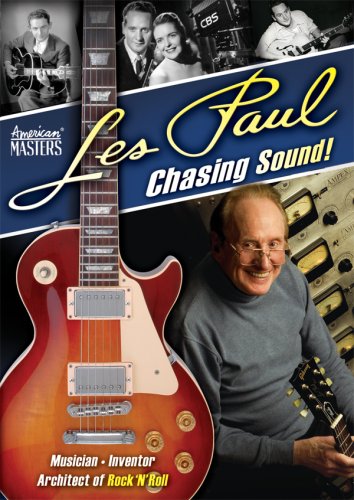
by Charlie B. Dahan
Les Paul Chasing Sound! Koch Vision 2007
I dare anyone to spend the time to find one musician who can say they have not had their musical career influenced by Les Paul. Maybe they aren't aware of his career as a country and jazz great, but if they play guitar, record or listen to music from the last 50 years, they have been touched in part by the master, the wizard, himself, ...
read moreLes Paul: Now!

by AAJ Staff
By Jennifer Odell
If you're craving new Les Paul tunes, the fourth generation release, Now! , is not where you'll find them. Not because it's not a great album--it is. Classical artist Michael J. Dutton's remastering allows you to hear more delicate elements of the different guitars' various tones and textures. But this album was originally conceived as a compilation for Les Paul. And now the compilation has been released three times without changing much. Most of the ...
read moreSteve Blum’s Molecular Organ Trio - Celebrating Les Paul at the Iridium on March 30th
Source:
Jane Blackstone
The Iridium Jazz Club proudly presents STEVE BLUM’S MOLECULAR ORGAN TRIO Monday, March 30 One show only: 9-10:30 pm Honoring the Great Les Paul 100th Year Celebration On Monday, March 30th, guitarist Steve Blum’s Molecular Organ Trio will make its exciting debut at the Iridium Jazz Club, and it’s about time. Blum, a native New Yorker, has been performing as a leader, in recording studios and as a preferred sideman for over 40 professional years. Whether he’s making music at ...
read more
Announcing the Winners of the "Jeff Beck - Rock 'N' Roll Party: Honoring Les Paul" Giveaway

Source:
All About Jazz
Enter the "Jeff Beck - Rock 'n' Roll Party: Honoring Les Paul" DVD Giveaway
Source:
Michael Ricci
All About Jazz members are invited to enter the Eagle Rock “Jeff Beck—Rock 'n' Roll Party: Honoring Les Paul“ DVD giveaway contest starting today. We'll select FIVE winners at the conclusion of the contest on May 22nd. Click here to enter the contest (Following Jeff Beck at AAJ automatically enters you in the contest.) Good luck! Your Friends at Eagle Rock Entertainment About Jeff Beck and Rock 'n' Roll Party: Honoring Les Paul Jeff Beck paid fitting Tribute to Les ...
read more
Jeff Beck: Les Paul Tribute Tour, CD/DVD, PBS Special

Source:
JamBase
TRIBUTE CONCERT OUT ON DVD FEB. 22; TOUR STARTS MARCH 24; SPECIAL AIRS NOV. 27 Jeff Beck paid fitting tribute to Les Paul last summer, celebrating what would have been the pioneering guitarist's 95th birthday by playing his friend and mentor's music, along with classic tunes from the era, in the same Times Square nightclub that Paul played every Monday for 14 years before his death in August 2009. Sponsored by Gibson Guitar and billed as “A Celebration of Les ...
read more
Jeff Beck's Scorching Les Paul Tribute Show
Source:
All About Jazz
Over 100 minutes and 27 songs, in his June 8th show at the New York jazz club Iridium, Jeff Beck did not play a single classic-rock heavy-blues or fusion-workout number from his own long catalog of records.
No “Freeway Jam," “Blue Wind" or “Beck's Bolero," not even his signature immolation of the Beatles' “A Day in the Life." In fact, everything the British guitarist played in this rare small-room date -- the first of two nights at the club with ...
read more
B.J. Jansen Pays Tribute to Les Paul on the Jazz Life

Source:
JM Creative
Les Paul is remembered by B.J. Jansen on his Jazz Life Show. B.J. Jansen pays tribute to Jazz Guitar Legend Les Paul with an interview he did less than a year ago with Les. Jansen Remembers: “Speaking with Les Paul... was so down-to-earth and comfortable... like talking to your Grandpa. I am lucky to have had the chance to interview him and listen to jazz history first-hand from Les. Les Paul confirmed ...
read more
Les Paul's Innovations Paved the Way for Rock 'N' Roll
Source:
Michael Ricci
The virtuoso picker influenced a generation of guitarists and had a series of hits in the '50s with wife Mary Ford. He invented an early solid-body electric guitar and pioneered new recording methods.
Les Paul was often called rock royalty, but for the people who knew the man before his death Thursday at age 94, that term often inspired a gentle chuckle.
Born in Wisconsin in 1915, Paul was a Midwestern jazz man who went on to make high-polish 1950s ...
read more
Jazz Guitarist Howard Alden Reflects on the Life of Les Paul
Source:
Michael Ricci
Today, in New York, at White Plains Hospital, guitar legend, Les Paul died of complications from pneumonia. He was 94 years old. Aside from having what any of us would consider to be a good run in the longevity department, Les Paul also realized great quality of life achievements within the quantity of his years. Since the birth of rock and roll, every kid with a dream wanted to own a Gibson Les Paul guitar; the six-string electric named for ...
read more
Les Paul

Source:
Rifftides by Doug Ramsey
Les Paul, who affected the course of popular music in profound ways, died yesterday at the age of 94. Jazz devotees may remember the guitarist most fondly from the days in the 1930s when he collaborated with Louis Armstrong, Roy Eldridge and Art Tatum, or his involvement with Jazz At The Philharmonic and a memorable 1944 blues duet with Nat Cole. He went on to star on radio and television, invent equipment, come up with innovative recording techniques and zoom ...
read more
Rock Hall Issues Statement Regarding Les Paul's Death
Source:
Just Roots PR
In response to the death of 1988 Rock and Roll Hall of Fame Inductee Les Paul, the Rock Hall has issued the following two statements: “Without Les Paul, we would not have rock and roll as we know it,” said Terry Stewart, president and CEO of the Rock and Roll Hall of Fame and Museum. “His inventions created the infrastructure for the music and his playing style will ripple through generations. He was truly an architect of rock and roll.” ...
read more

Don Wood
guitar
Jesse Shafer
guitarPhotos
Music
Videos
Similar

Django Reinhardt
guitar
Nat King Cole
piano and vocals
Wes Montgomery
guitar
Stevie Ray Vaughan
guitar
Charlie Christian
guitar, electric
Jeff Beck
guitar
Eric Clapton
guitar, electric
John Mayall
vocals
Jimmy Page
guitar
Steve Miller
guitar and vocals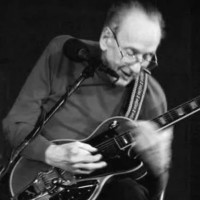
Les Paul
Instrument: Guitar, electric
Born: June 9, 1915
Died: August 12, 2009



