Home » Jazz Musicians » Juhani Aaltonen
Juhani Aaltonen
"I feel that, both in my personal life and as a musician, I have often overcome the odds. Even some of the unlikeliest of my dreams and goals have come to pass, and music has always been the force to carry me through." And through the years that he has followed his calling Juhani Aaltonen has worked with all of the leading musicians in the burgeoning Nordic jazz scene from veteran Norwegians Jan Garbarek and Arild Andersen to the hottest of Finnish musical iconoclasts like Raoul Björkenheim.
Aaltonen’s first public appearance was in1957 with a local band led by trumpeter Heikki Rosendahl and he began to work as a free-lance musician in 1961. Initially he also studied at the classical flute at the Sibelius Academy in Helsinki but soon stopped to work as a full-time jazz musician. The Finnish jazz scene in the 1960s was even more limited than the Danish and Swedish, but as a consequence cooperation between musicians from these countries became more extensive over the decade. By the end of the decade Aaltonen performed regularly with the Nordic All Stars led by trumpeter Palle Mikkelborg and a constellation of prominent Nordic artists, including Garbarek, Bertil Lögren and Terje Rypdal.
However it was with three fellow Finnish musicians, trumpeter Henrik Otto Donner, pianist Heikki Sarmanto, drummer Edward Vesala that Aaltonen’s roots go deepest. More a composer than a trumpeter, Donner recognises that Aaltonen is his alter ego on the saxophone. Both men are of a more reflective disposition and, since their earliest cooperation in the nascent Finnish scene in Helsinki, both have been at home in the other’s orbit. The 2003 album of Donner’s compositions, Strings Revisited, shows that the two are still on the same wavelength. Pianist Heikki Sarmanto is an even closer associate of Aaltonen’s, with the two producing over 30 albums under shared credits or Sarmanto’s name over the 40 years of their cooperation. During the 1990s, they worked extensively together on a number of concert tours and recordings of extended works, such as an eight-part suite for flute called Pan Fantasy and a composition for flute and piano titled Silver Spell. During this time Aaltonen also found time to perform and record two discs of religious music on Footprint Records.
Read moreTags
Juhani Aaltonen: To Future Memories – The Music of Antti Hytti
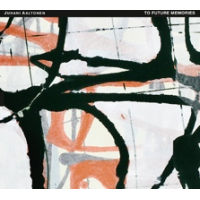
by Dave Wayne
Can anyone just decide, on a whim, to take up an instrument and simply become a working musician anymore? That's precisely what Juhani Aaltonen did as an eighteen year-old living in the town of Inkeroinen, in central Finland back in the early 1950s. Apart from a year of study at the Sibelius Academy in Helsinki, and a semester at Berklee (where he worked with Herb Pomeroy), Aaltonen is that rarest of all birds: a self-taught master musician who learned directly ...
read moreJuhani Aaltonen: To Future Memories
by Glenn Astarita
Preeminent Finnish saxophonist Juhani Aaltonen is approaching his 80th birthday and continues to meld his technical artistry with fresh concepts. This album features compositions by composer and bassist Antti Hytti, who penned many of these works for movies and short films, featuring the saxophonist performing on the originals. Aaltonen alternates between tenor sax and flutes. With his noteworthy associates, including the dual bass attack of Ulf Krokfors (right channel) and Ville Herrala (left channel), the music takes on ...
read moreJuhani Aaltonen: To Future Memories
by Dan McClenaghan
Helsinki-based TUM Records, launched in 2003, “promotes more experienced musicians whose work is not favored by commercial trends of our time." The label is especially supportive of the freer end of jazz's spectrum, offering up albums like Kolibri by Finish pianist/harpist Iro Haarla, violinist Billy Bang's Da Bang, and trumpeter Wadada Leo Smith's Occupy the World, to name just a few of the label's adventurous 2013 offerings. Finnish saxophonist/flutist Juhani Aaltonen (b. 1935) , who cites saxophonist John ...
read moreJuhani Aaltonen / Heikki Sarmanto: Conversations
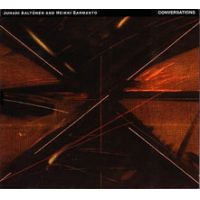
by Raul d'Gama Rose
The splendid music on Conversations is as close to the celebration of Impressionism in modern music as possible. It is true that saxophonist Juhani Aaltonen and pianist Heikki Sarmanto create epic narratives here, and also true that both act as characters in those narratives. Of greater significance, however, is the extraordinary emotion of these musical stories, facilitated by sublime technique and use of dynamics by both musicians. Aaltonen crowns his playing with broad glissandi in longlegato passages marked by staggeringly ...
read moreJuhani Aaltonen: Reflections
by Brian P. Lonergan
If Reflections is any indication, Finland's emerging TUM Records should have a long and happy life ahead. Fans of free improvisation, which is the label's focus, should take note.
Before you even get to the music, TUM's presentation is impressive. In an age when digital music and personal playlists are ever gaining new acolytes, TUM's production values are a reminder of the satisfaction that a well-packaged album can deliver. There's an attractive modern art cover (from Finnish Constructivist ...
read morePhotos
Music
Similar

Pat Metheny
guitar
Ornette Coleman
saxophone, alto
McCoy Tyner
piano
Harold Mabern
piano
Jon Balke
piano
Stan Tracey
piano
Phineas Newborn, Jr.
piano
Eero Koivistoinen
woodwinds
Samuli Mikkonen
piano