Home » Jazz Musicians » Michael Pedicin
Michael Pedicin
In 2014, saxophonist Michael Pedicin wrote about music in a brilliant article in Downbeat called “The Improviser as Musical Philosopher,” writing, “No one thrives alone. We are all interconnected... Who we are is what we play.” Putting the emphasis on the “we,” Pedicin wrote, “...we do not play alone; we play with others.” It’s no wonder that this composer and improviser has been so drawn to John Coltrane all his life, as many instrumentalists are, if only for Trane’s facility on his horn. But Pedicin recognized a long time ago that the art of playing music, of improvising, has a deep heritage that Trane had tapped into in his young life. Pedicin arrived at this recognition through the long and winding road and interplay of playing jazz with his education in medicine and cognitive psychology, and just living a life adapting to the vagaries of the music business and helping others through his private practice as a psychologist.
In his essay, Pedicin embellished on a South African belief system called ubuntu and rightly compared it to the dynamics of collective improvisation and the formation of spontaneous communities. Ubuntu says, “I am because you are,” that one’s humanity is affirmed through recognition of the other in all their uniqueness and difference. In improvisation, rules may be abandoned if they are limiting, and the band is always moving with each other and always engaged in a process of dialogue.
These are understandings learned from being involved in the act of experiencing live music early on. When his very supportive father, early rock and roll pioneer Mike Pedicin, would drop his young son off to hear saxophonist Willis “Gator Tail” Jackson at Club Harlem on famous Kentucky Avenue in Atlantic City when he was 15 years old and leave him there (protectively overseen by a bartender the senior Pedicin knew well) while he did a gig in the same town, both father, son, and the clientele of Club Harlem trusted in the power of the music, crossing racial and cultural boundaries to appreciate the interconnectedness of jazz and blues.
Michael Pedicin went to Philadelphia Music Academy (PMA), a strictly European classical institution, which eventually became the University of the Arts; expanding its vision to jazz and more contemporary pursuits well after Pedicin had graduated. Of course, they hired him later as an educator, teaching at University of the Arts from1976 to 198. While at PMA, Pedicin studied with the premier music theory coach of Pat Martino and John Coltrane, and many of the city’s serious jazz players—Dennis Sandole. Clarinetist Michael Guerra and saxophonist Buddy Savitt were other mentors that brought Pedicin to the point that he switched from alto to tenor saxophone and almost instantly became a sought-after session player in the 1970s with Sigma Sound Studios, working with producers Kenny Gamble, Leon Huff, and Thom Bell on hundreds of sessions with the Spinners, the O’Jays, Lou Rawls (in between touring with Maynard Ferguson), Stevie Wonder, and David Bowie.
Read moreTags
Michael Pedicin: 'Just the Three of Us' at Chris’ Jazz Café

by Victor L. Schermer
Michael Pedicin: Just the Three of Us Chris' Jazz Café Philadelphia, PA September 10, 2022 This superb set of mainstream jazz by three accomplished and dedicated musicians: Michael Pedicin on tenor saxophone, Jim Ridl on piano, and Dean Johnson on bass, owes much of its successful execution to the trio format without drums. The absence of drums places more of the rhythmic responsibility on the others, especially the bass, but it also ...
read moreMichael Pedicin: As It Should Be: Ballads 2

by Dan Bilawsky
With Ballads...Searching For Peace (Self Produced, 2011), saxophonist Michael Pedicin managed to produce a work that satisfied by focusing on subdued sentiments while also shining a light on the compositions of some of the great tenors of all time. On this perfectly complementary companion piece, Pedicin dims the lights and wears his heart on his sleeve again. But this time it's guitarist Johnnie Valentino's music that's in the spotlight. Eight of the ten tracks that comprise As ...
read moreMichael Pedicin: Compassion Joins Creativity

by R.J. DeLuke
Saxophonist Michael Pedicin, he of the rich tone and fertile imagination, is on a tear lately. His last three albums are remarkable, exhibiting both his catchy improvisational skill and simple beauty. His 2011 album, Ballads... Searching for Peace (Jazz Hut Records) is that beauty on display and one of the best ballad albums to come a long in a while. Now, Pedicin has crafted an album of varied music, named for his view of how the world should ...
read moreMichael Pedicin: Why Stop Now/Ubuntu

by Dan Bilawsky
Michael Pedicin, like many a tenor saxophonist, bows at the altar of John Coltrane. Pedicin's work in the past has frequently referenced that iconic figure through theme, spirit, sound and/or song selection, and he continues along a similar path on Why Stop Now/Ubuntu. For his twelfth outing as a leader, Pedicin crafted a program that speaks in different musical tongues but aims to deliver a single message. Ubuntu, as a term and philosophy, is all about humanity, ...
read moreMichael Pedicin: Live @ The Loft

by Dan Bilawsky
The tenor saxophone has earned a reputation over the years as the wrecking ball of the reed family, but Michael Pedicin doesn't seem to buy into that line of thinking. While Pedicin can knock down walls and wreak havoc with his tenor if he so chooses, he rarely goes to town in this fashion. He'd rather play the role of the musical soul stirrer than the storming brute and it makes perfect sense, since beauty becomes him. ...
read moreMichael Pedicin: Ballads...Searching For Peace

by Dan Bilawsky
Ballads are often consumed as one of many items on a musical tasting menu, but they can also serve as a satisfying meal on their own, when prepared by the right chef. On Ballads...Searching For Peace, tenor saxophonist Michael Pedicin serves up seven satisfying songs from the softer side of jazz, while also paying tribute to some tenors of note. John Coltrane's Ballads (Impulse!, 1963) was the inspiration behind this album, but the dearly departed icon is ...
read moreMichael Pedicin: Everything Starts Now...

by J Hunter
"To my friend, Michael Brecker, the ruler of it all.. I miss you." That is the last line of Michael Pedicin's dedications on Everything Starts Now... and it is the key to the whole date. Although Coltrane runs deep, the Philadelphia tenor man's formative years (Pedicin studied with Denis Sandole, an instructor of Coltrane's), the love Pedicin has for Brecker and Brecker's sound is palpable throughout the disc.
It's a coin flip as to what Brecker's greatest accomplishment ...
read moreTenor Saxophonist Michael Pedicin To Release "As It Should Be: Ballads 2," April 21
Source:
Terri Hinte Publicity
With the April 21 release of As It Should Be: Ballads 2, tenor and soprano saxophonist Michael Pedicin continues to spread the message of acceptance and justice he eloquently shared on his critically acclaimed 2011 album Ballads … searching for peace. “I’m one of those diehard '60s kids that grew up concerned about peace and togetherness,” Pedicin explains. “I think about that every day of my life. We’re all one.” In addition to covers of John Coltrane's “Crescent” and Paul ...
read more
Saxophonist Michael Pedicin In Media On Wed. May 21st!
Source:
Jim Miller
The Jazz Bridge Third Wednesdays Neighborhood Concerts Series in Media at the Unitarian Universalist Church, 145 West Rose Tree Road in Media PA presents saxophonist Michael Pedicin on Wednesday, May 21st. Showtime is 7:30 p.m., tickets are $10 / $5 for students and are available only at the door. For info: 215-517-8337 or visit Jazz Bridge. For five decades, saxophonist and composer Michael Pedicin has been breaking new ground as a creative improviser. His father was also a saxophonist and ...
read more
"Why Stop Now ... Ubuntu," 12th CD By Tenor Saxophonist Michael Pedicin, Due Sept. 24
Source:
Terri Hinte Publicity
A passionately soulful improviser, tenor saxophonist Michael Pedicin is in the midst of an impressive creative surge clearly reflected in his prolific work as a recording artist and composer. His new CD, Why Stop Now...Ubuntu, is his 12th as a leader—and 5th in the last six years. Scheduled for release on September 24 by his GroundBlue label, the disc reconfirms his status as a masterful post-bopper. Much of the music on Why Stop Now was inspired by the 2012 Newtown ...
read more
Tenor Saxophonist Michael Pedicin's New CD Features His Working Band "Live At The Loft"
Source:
Terri Hinte Publicity
Tenor saxophonist Michael Pedicin fulfilled a longtime dream last fall by releasing an album of all ballads, a challenging form of which he is a master purveyor. In the process Pedicin, whose 40-plus-year career has included tours with Dave Brubeck and Maynard Ferguson, experienced a new ease with the recording process and quickly made plans for his next CD. The result, Live at the Loft, is a bracing club date with his working group that his Jazz Hut label will ...
read more
Saxophonist Michael Pedicin's New Ballads CD Due Oct. 18
Source:
Terri Hinte Publicity
Tenor saxophonist Michael Pedicin, whose 40-plus-year career has included tours with Dave Brubeck and Maynard Ferguson, has long demonstrated a profound feeling for ballads—those slow, tender songs with lovely melodies that, in the hands of the best purveyors, create a powerful emotional intimacy. On his new CD Ballads... searching for peace, Pedicin focuses on the genre with seven masterful renditions, ranging from a timeless standard to attractive originals and classics of the jazz repertoire. The disc, Pedicin's 10th, is due ...
read more
Jazz Bridge Presents Saxophonist Michael Pedicin Jr. at Palombaro Club on October 13th
Source:
Suzanne Cloud
Appearing on Wednesday October 13th at the Palombaro Club, 2632 E. County Line Road in Ardmore, PA, will be saxophonist Michael Pedicin, Jr. and his band, featuring pianist Dean Schneider, bassist Tim Lekan, and drummer Bobby Shomo. One show: 7:30-9PM. Tickets: $10/$5 for students. No advance sales. Free Refreshments! For info: 215-517-8337 This opening concert will kick off a new jazz series at the Palombaro Club from October 2010 through May 2011 that will be hosted by Michael Pedicin and ...
read more
Michael Pedicin's Sax Had Them from the Start
Source:
All About Jazz
By David R. Adler For The Inquirer
On April 19, when Terence Blanchard played the movie music of Spike Lee at the Kimmel Center, Michael Pedicin conducted the orchestra. The evening's best-kept secret was that Pedicin, 60, is a fine tenor saxophonist with seven albums to his credit.
At Chris' Jazz Cafe on Saturday, Pedicin took his turn in the spotlight, fronting a quintet and playing material from a new album, his eighth, Everything Starts Now.
All the ...
read more
Saxophonist Michael Pedicin Launches New Website
Source:
All About Jazz
You're invited to visit the new Michael Pedicin website. Plenty of sound samples, links, photos and more! May 10th - CD Release Party at Chris' Cafe Come celebrate the official release of Michael Pedicin's lastest recording Everything Starts Now. About Michael Pedicin Everything Starts Now is the beginning of a new wave for Michael Pedicin. After spending years in an integrated realm of musical and professional activity, Michael has emerged with an album worthy of serious, yet very accessible listening. ...
read more
Michael Pedicin's "Everything Starts Now" on Jazz Hut Records
Source:
All About Jazz
Jazz artists who maintain the highest standards of the classic tradition should remind the listener of the best of the past, while presenting their own musical visions in an original and compelling fashion. For those who agree with this, Everything Starts Now by the outstanding tenor saxophonist Michael Pedicin's Quintet will truly be a revelation. As a tenor saxophonist, this 60-year old master has a sound that is entirely his own, evolved through the grand tradition, and as organic and ...
read more
"Whether you know it or not you've been digging Pedicin's sax for 45 years . . . With a jazz suite inspired by the happenings in Newtown, this soulful set shows an artist continuing to hit new high spots while at the top of his game." "Michael Pedicin Jr. tempered the soft-focus lyricism that the quartet’s saxophone chair has demanded with some discreet John Coltrane devices and an attractive sense of spacing and drama." —The New York Times
"Michael Pedicin Jr. seems more dedicated to his art than to radioplay." —Downbeat Magazine
Primary Instrument
Saxophone, tenor
Location
Philadelphia
Willing to teach
Advanced only
Credentials/Background
Saxophone instructor at University of the Arts, 1974-2000.
Senior lecturer at University of the Arts, jazz studies.
Director of jazz studies, Temple University, 1981-1988.
Currently associate professor of music/coordinator of jazz studies.....Richard Stockton College of New Jersey

Michael Brecker
saxophone, tenor
John Coltrane
saxophonePhotos
Music


Blame It On Your Heart
From: Ballads... Searching For PeaceBy Michael Pedicin
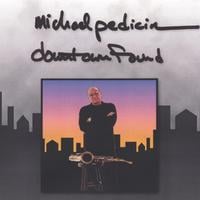
You Dont Know What Love Is
From: Downtown FoundBy Michael Pedicin
Pelican
From: Everything Starts Now...By Michael Pedicin
Videos

Michael Pedicin
Location: Philadelphia
Instrument: Saxophone, tenor
Born: July 29, 1947
Publicist: Terri Hinte Publicity



