Home » Jazz Musicians » John Ricci
John Ricci
Combining the culture of his Argentine roots and background in a musical family with a deep study of saxophone influences such as John Coltrane, Ben Webster, Stan Getz, Michael Brecker, Branford Marsalis and Mark Turner, John Ricci draws together soulful, hard swinging, harmonically modern and rhythmically diverse elements to his compositions and arrangements.
Having studied to dedicate himself as a top performer and educator, John's mentoring has been quite balanced with the likes of renown tenor saxophonist and jazz leader Jerry Coker and world class pianist, composer and former Blakey Messenger Donald Brown.
John has been performing regularly as a side man and a leader on various projects for more than 15 years, making it ideal for him to finally break out with his own new project that demonstrates his creativity, passion and seasoned refinement in with his own original works and arrangements. Surrounding himself with some of the very finest, experienced and most musically communicative side men in the southeast, John's new quartet project Holding Time can excite the most dedicated and progressive jazz listeners as well as the uninitiated:
“Holding Time showcases Ricci's impressive mastery of his horn and his well-schooled compositional ability”...will have even the most undemonstrative listener head bopping and toe tapping. Holding Time is an impressive debut from a young saxophonist/composer whom I hope we hear much more from in the future.” --Brad Walseth, jazzchicago.net
While attending Florida State University School of Music earning a Masters of Music in Jazz Studies under a teaching assistantship, he's performed with Marcus Printup, performed at Preservation Hall in New Orleans and has received many awards including the 1995 Combo Division of Down Beat Collegiate Music Competition. John has since performed with internationally known recording artists and in numerous clubs and festivals including Chijazz Festival in Singapore, Jacksonville Jazz Festival, Savannah Jazz Festival and most recently with pianist/composer Donald Brown and trumpeter Stephane Belmondo in the Knoxville Jazz Festival.
John has taught at the University of North Florida, and is currently the Director of Jazz Studies at Jacksonville University in Jacksonville, FL. He performs regularly for festivals and club bookings with his quartet.
Tags
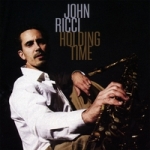
John Ricci: Holding Time
by John Barron
Saxophonist/educator John Ricci comes out swinging for his debut recording Holding Time. The Jacksonville University Professor of Jazz Studies combines original compositions and arrangements of standards for an intriguing set of mainstream jazz.
The disc opens in vigorous fashion with the up-tempo “Mode Time," a perfect minor key workout for Ricci's robust tenor tone. The saxophonist weaves together a tight-knit solo, heavy on thematic development. Pianist Joshua Bowlus follows Ricci with a sweltering solo turn. The mood is lightened somewhat ...
read moreJohn Ricci: Finalist in the 8th Annual Independent Music Awards

Source:
All About Jazz
A special request by Saxophonist John Ricci Hello Everyone, As some of you may already know, I've been fortunate enough to be selected as a finalist in Independent Music Awards in the jazz category. I was selected along with four other finalists by judges such as Paquito Di Rivera, John Patitucci and many others of similar ilk. I would not usually ask or bother you all with a request like this, but this is a ...
read more
Review by Brad Walseth
Tenor saxophonist John Ricci lists Wayne Shorter, Branford Marsalis, Mark Turner, Joe Henderson, John Coltrane and Ben Webster as his biggest saxophone influences, and this impressive group of Jazz royalty is certainly to be found as elements in this young player’s sound. Ricci studied with Jerry Coker and former Jazz Messenger Donald Brown, who he considers a mentor. He later taught at Florida State University and the University of North Florida as an assistant professor assisting Bunky Green, and is now the Director of Jazz Studies at Jacksonville University. The saxophonist/composer has played and recorded with people like Marcus Printup, Angel Roman and Rebecca Zapen, performs at festivals and clubs and has won numerous awards. “Holding Time” is Ricci’s entertaining debut release and features four original compositions as well as two standards.
Primary Instrument
Saxophone, tenor
Willing to teach
Intermediate to advanced
Credentials/Background
2002 - Present Director of Jazz Studies at Jacksonville University Professor of Saxophone 1999-2000 Visiting Professor of Jazz Studies at University of North Florida Assisted Bunky Green with his saxophone teaching load
Clinic/Workshop Information
Saxophone Clinic: *Developing a kinesthetic awareness of the saxophone as a direct voice to your personality. *Voicing and Tone Shaping, breath support and embouchure *Developing an effortless approach to technical facility *Ensemble sensitivity within the saxophone section Large and Small Ensembles: *Jazz as a communicative rhythmic language. *Ensemble balance and sensitivity, sounding like one instrument by creating a dynamic pulse in sycopated phrasing
Music
Recordings: As Leader | As Sideperson
Similar

Pat Metheny
guitar
Bill Evans
piano
Charlie Parker
saxophone, alto
Dave Brubeck
piano
Chick Corea
piano
George Kahn
piano
Ella Fitzgerald
vocals
Wayne Shorter
saxophone
Gene Harris
piano
Ben Webster
saxophone, tenor
Steve Kuhn
piano
Branford Marsalis
saxophone
Clark Terry
trumpet
Donny McCaslin
saxophone, tenor
Ramsey Lewis
piano
Lynne Arriale
pianoJohn Ricci
Instrument: Saxophone, tenor
Born: January 4, 1969



