Home » Jazz Musicians » Rosco Gordon
Rosco Gordon
Rosco Gordon not only placed many a hit on the rhythm & blues charts in the 1950s, he is also remembered as one of rock and roll's founding fathers and a key figure in the formation of Jamaican ska. Hailed for his unique sense of timing and off-beat shuffle on the 88s, something Sam Phillips( Sun Studios) called "Rosco's Rhythm," the gifted R&B veteran is now considered a seminal early rock piano player alongside Ike Turner and few others, Rosco Gordon was an influential performer-composer, whose contributions to contemporary music will forever endure. A native of Memphis, born April 10, 1928, Rosco Gordon skyrocketed to fame in the early fifties with a string of hits for the Chess, RPM and Duke labels, including originals like Booted" and "No More Doggin'." Many of his early recordings were made at Sam Phillips' Memphis Recording Service, alongside friends and fellow musicians Ike Turner, Howlin' Wolf, B.B. King and Little Milton. At the radio powerhouse WDIA, where Rosco played piano and sang on his popular weekly show, he made additional recordings with friends Johnny Ace, Bobby "Blue" Bland and Earl Forest, and when Sam Phillips created the Sun Records label in the mid-fifties, Rosco returned to work with his favorite producer and continued to release brisk selling singles for the growing radio market throughout that decade. A noteworthy contribution to pop music during this phase of Gordon's career for Sun included "The Chicken," a song which not only started a dance craze but also made famous a rooster named "Butch," who, decked out in miniature suits to match his owner, gyrated and drank scotch during live performances, to the delight of audiences. However, Butch succumbed to his excesses at an early age, and Rosco could never find an equal talent among the henhouses of the South. In 1960, inspired by a riff from fellow musician Jimmy McCracklin, Rosco penned "Just a Little Bit," a song which has become one of a handful of standards from the R&B era, but remarkably, on the heels of the success of his original rendition, Rosco walked away from the music business for love. After the failure of his first marriage to Ethel Bolton, thanks largely to the lifestyle of the touring musician, Rosco elected to settle down with Barbara Kerr, near the bright lights of Manhattan, to raise his second family. He purchased part ownership in a laundry business and became a full-time father to three sons and principal caregiver when Barbara was diagnosed with bone cancer in 1982.
Read moreTags
Photos
Music

Videos
Similar

B.B. King
guitar, electric
Ike Turner
guitar
Big Joe Turner
vocals
Albert Collins
guitar, electric
Allen Toussaint
piano
Percy Mayfield
vocals
Little Milton
guitar, electric
Amos Milburn
piano

Irma Thomas
vocals
Pee Wee Crayton
guitar, electric
Willie Mabon
piano and vocals
Smiley Lewis
vocals
Lowell Fulson
guitar, electric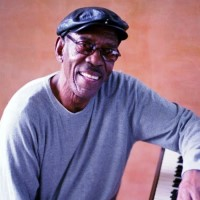
Rosco Gordon
Instrument: Piano
Born: April 10, 1928
Died: July 11, 2002



