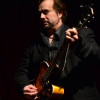
Home » Jazz Musicians » Skip Heller
Skip Heller
October 4 ,1965, El Paso, TX — Johnny Cash is arrested for smuggling amphetamines across the border from Mexico. Meanwhile, in the thriving metropolis of Philadelphia, Skip Heller is born.
HartfordRaised in and around the City of Brotherly Love, he develops an early interest in music, largely the result of seeing John Hartford on the Smothers Brothers and Glen Campbell television shows. At age 4, he buys his first record, EARTHWORDS AND MUSIC, with money he got for his birthday, thus beginning a lifelong habit of running to a record store every damn time he has money in his hand.
His school years are uneventful. There's a brief bout with piano lessons. Also, he discovers rockabilly music at age 8, and decides he wants to play guitar. His grandmother takes him to see an Elvis Presley concert at the Spectrum (the local sports arena), and in effect seals the deal. He loses all interest in piano lessons (since none of what he's being force-fed has anything to do with Elvis, Ricky, or even Jerry Lee) and starts screaming for a guitar
As his little mind is being progressively warped by early rock'n'roll and some big band records he comes across at his grandmother's house, he stumbles onto the weekly Dr Demento radio show, and is exposed by this to a music from a wide variety of periods and American cultures, including everything from the klezmer comedy of Mickey Katz to the iconoclasm of Frank Zappa. Demento also plays John Hartford. If Skip's parents have anyone to blame for the questionable musical and sociological development of their eldest son, it is Dr Demento.
In 1975, Skip's little sister, Jennifer, then five years old, suffers a fall from the fenced-in porch of the second floor of his grandmother's South Philadelphia apartment and is rushed to the hospital. For about six weeks, every day after school is spent in the waiting room of a South Philadelphia hospital. The understandably nervous mother, then in vocational school to become a librarian, has the presence of mind to find stuff to occupy the time of Skip and his younger brother Joel (then 8). For Skip, she finds the thickest Elvis-related book she can get her hands on — Irwin Stambler's Encyclopedia of Country Music. The young Skip, with little else to occupy his time, absorbing the book for months, reading, re-reading, and memorizing bios of country music performers ranging from Uncle Dave Macon to Bill Monroe, Merle Haggard, and Kinky Friedman. He soon after discovers WRCP, a local country station, takes out a subscription to Country Music magazine, and starts collecting country records along with comedy, old big bands, and early rock'n'roll. A budget 45's rack at the Berlin Farmer's Market makes things easier, with singles three for a dollar. Also, he manages to trashpick old records around the neighborhood.
Read moreTags
The Reckless Night Ensemble: Pan Americanos: The Songs of Raymond Scott & Lalo Guerrero
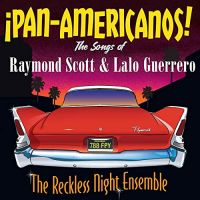
by Chris M. Slawecki
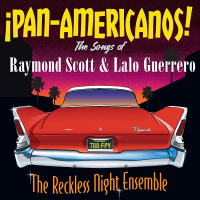
Led by guitarist Skip Heller and bassist Nick Ornelas, The Reckless Night Ensemble on Pan Americanos feature the music of composers Raymond Scott and Lalo Guerrero and simultaneously captures two of Los Angeles' historic sounds in musical daguerreotype. A chameleonic jazz-blues guitarist and small ensemble roots music master, Heller ties several different musical threads together into Pan Americanos. In the early 2000s, he teamed up in Los Angeles with Lalo Guerrero, often called the Father of Chicano music, ...
read moreSkip Heller: Beyond These Hills: The Skip Heller Anthology 2017-20

by C. Michael Bailey
In terms of national exposure, Fred “Skip" Heller has always hidden in plain sight. Predominantly known in his native Philadelphia and adopted-native Los Angeles, Heller is a musician / composer / producer of note and has been for twenty years. He deserves wider notice if for no other reason than he shares much in common with Randy Newman—he captures the indelible American Spirit in song, warts and all, using the melodic vehicles struck from the heart of America. Heller has ...
read moreSkip Heller, Birdie Jones, and Carnival of Soul

by C. Michael Bailey
“I have a bluegrass gig tomorrow am. Playing a Link Wray Tribute tomorrow night...seeing the Dead Milkmen tonight." --My most recent text message from Fred “Skip" Heller. For all of the recently revealed foibles of Social Media, perhaps the best thing about it is how it makes a really big world smaller. I do not remember how I originally met Skip Heller (well, I do, it was reviewing his album Homegoing (Innova Records, 2002), but that ...
read moreNotable and Nearly Missed 2017
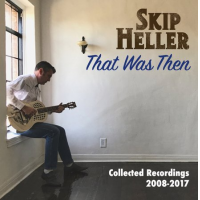
by C. Michael Bailey
I am winding down the twentieth year contributing to All About Jazz. I have never had a year where there wasn't too much good music to review (or it got to me too late). This is my attempt to make good before '17 becomes '18. Skip Heller That was Then: Collected Recordings 2008- 2017 Self Produced 2017 In addition to his being a restless music provocateur surveying the landscape of Americana, Skip Heller ...
read moreSkip Heller: For EP Fans Only
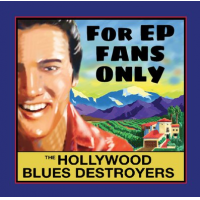
by C. Michael Bailey
Fred “Skip" Heller is, in my estimate, a most undervalued cultural mind. Musically restless by nature, Heller is a two-million candle light, illuminating whatever musical style is intriguing him at the moment. This restlessness has led to Heller's exploration of the organ trio on It's Like That: The organ Trio Anthology 1998--2004 (Jewbilee, 2004) and Fakebook (Hyena, 2004) and a deep descent into the Heart of America. Heller began to sharpen his focus with specialized projects like 2012's ...
read moreSkip Heller: San Fernando Valley Blues and The Hollywood Blues Destroyers
by C. Michael Bailey
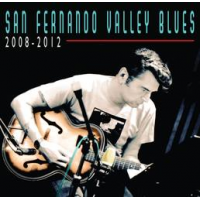
Fred “Skip" Heller. Now there is a rara avis. A musical omnivore as drawn to Glenn Gould as to Roger Miller, Heller's talent and dedication to music and its history deserves so much more than local notoriety in the jny: Los Angeles and jny: Philadelphia areas it enjoys. Then, if I were LA, I would not share him either...he is that special of a person and musician. Heller's personal sound has matured and quickened over his most ...
read moreThe Hollywood Blues Destroyers: Singles Drinking Doubles
by C. Michael Bailey
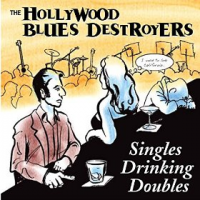
Avoid the intended seduction of the sexy and dangerous collective called The Hollywood Blues Destroyers for the Oz behind the curtain with his merry band of friends is one Fred Steven “Skip" Heller. AllMusic's Jana Pendragon calls Heller, “America's most confusing country singer." Whatever Heller might be, he is a defender of American Music...all of it. For Heller, music is mot the disposable commodity it has become since 2000. It remains that spiritual idea given life by those special people ...
read moreComposer/Guitarist Skip Heller Launches "Hardly Strictly Jazz" Column at All About Jazz

Source:
All About Jazz
Genre-bending musician and longtime friend of All About Jazz, Skip Heller has launched “Hardly Strictly Jazz," a monthly column that focuses on great music that doesn't fit comfortably in a categorical box. If you're someone who prefers music to categorical boxes, this column is dedicated to you. We're kicking the column off with a look into a document that embodies the great American pioneering spirit: Sun Ra: The Eternal Myth Revealed Vol. 1. We hope this sets the tone for ...
read more
Skip Heller - Homegoing (2002)
Source:
Something Else!
By Mark Saleski Artists deserving wider recognition. You see this kind of thing all the time in music polls. And do they ever gain wider recognition? Not usually. Mostly because they're maybe a little too esoteric, too interesting for the mainstream public. I know that's playing kinda fast and loose with musical stereotypes ... and heck, maybe I'm being too hard on people's taste ... but it sure does seem like some artists are swept under the rug just because ...
read more
Skip Heller's Anchorline '07 Tour Kicks Off

Source:
All About Jazz
The Skip Heller Trio hits the road in support of their Ropeadope Digital summer release, Along the Anchorline: the Skip Heller Trio at Sun. The hardest-working road band in jazz is once again hitting the Flat 48 with a vengance and are not to be missed.
Sunday, May 20, Phila, PA: Tritone (8 pm show)
Sunday, May 27, New York, NY: Jimmy's, opening for Bobby Previte's Trio as part of the Freestyle Creative Music series (7 pm)
Wednesday, May 30, ...
read more
Bob Dorough & Skip Heller Pay Tribute to Phila Pianist Eric Spiegel in Podcast
Source:
All About Jazz
TO ERIC SPIEGEL WITH LOVE FROM SKIP HELLER & BOB DOROUGH should be a disc, but some things are done for love, not money. The venerated singing pianist (83 years young) and the critically-lauded maverick jazz guitarist play a handful of tunes performed often by Spiegel and Heller, when the latter was making his bones under the former's watchful eye.
Spiegel, who was one of Philadelphia's great jazz talents, died last summer after years of failing health. Both as jazz ...
read more
Skip Heller To Release New "Live" Album, "Liberal Dose"
Source:
All About Jazz
Skip Heller to Release New Album Liberal Dose Recorded “Live" In Huntsville, AL, on His Own Label Imprint, Skyeway Records New York, NY - September 30, 2005 is a date that will live in infamy for two reasons. First, it's the day that former House Majority leader Tom Delay was indicted. Secondly, that night jazz guitarist Skip Heller - in an inexplicably good mood - took the stage with his trio at The Flying Monkey in Huntsville, Alabama to record ...
read more
Skip Heller -- The Book Tour?
Source:
All About Jazz
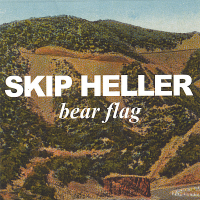
THE TOUR The guitarist AAJ calls “genius by lightning strike" is hitting the road in support of his two recent Dreambox releases, BEAR FLAG and OUT OF TIME, in addition to his brand new book GLAMOUR PROFESSION: THE ONGOING SKIP HELLER (which comes with a limited edition documentary DVD). The Alabama trio will cut a new record on this swing as well, tentatively titled BROADSIDES. Wednesday September 14, Badhee Badhu Gallery, 309 Cherry St, Philly, 8 pm, all ages gig, ...
read more
Skip Heller -- King Of All Media/Alabama World Tour
Source:
All About Jazz
AAJ favorite Skip Heller -- “like witnessing genius by lightning strike" the venerated site has reported -- is on the road again, plus doing a little TV to promote his TWO (!) new Dreambox releases, BEAR FLAG and OUT OF TIME. At 9 am, viewers in the Pensacola/Mobile can catch the trio on WKRG News 5 at 9 (that's Channel 5 at 9 am). Skip will be backed by longtime cohorts Chris Spies (organ) and David White (drums). Then, there ...
read more
Tzigane Music Presents The Skip Heller Trio at the Jack-O-Lantern Ballroom, Kansas City, Friday June 10
Source:
All About Jazz
Guitarist Skip Heller, whose cult keeps growing via brilliant, inventive organ combo discs that at one embrace tradition and defy convention, is coming to Kansas City in support of his TWO (!) new Dreambox releases, OUT OF TIME: THE SKIP HELLER TRIO LIVE IN PHILLY (a standards date), and BEAR FLAG, a typically audacious studio date of new originals. AAJ has described listening to Heller as “like witnessing genius by lightning strike". Little wonder -- his stock in trade is ...
read more
Skip Heller joins the Dreambox Media Family of Artists
Source:
All About Jazz
Guitarist Skip Heller, whose release FAKEBOOK was one of the critics' favorite releases of 2004, has joined Dreambox Media’s roster of artists. “I like the way they do business,” says Heller, “because it’s really set up around the artist, not the retailer. The way they do things, I can make money at about two hundred copies. I mean actual profit, actual dollars in my hand.” The label, started by Philadelphia drummer Jim Miller over two decades ago, has long been ...
read more
Skip Heller Trio To Record Live In Philly
Source:
All About Jazz
On December 12, LA-based/Philly-bred guitarist Skip Heller will take the stage at 8:00 P.M. sharp for a live set that will be his next disc. Accompanied by drummer John Kennedy and the brilliant young organist Lucas Brown, the trio will lay down what Heller calls “the real template live organ jazz stuff, like the live albums by Jack McDuff, Shirley Scott, and Groove Holmes where the band stretched out and played tunes." Heller's recent Hyena Records release, Fakebook, has been ...
read more
Photos
Music
The Shirley Scott Trio WAS the Time
From: Bear FlagBy Skip Heller
Videos
Similar

Charlie Byrd
guitar
Joe Beck
guitar
Joe Diorio
guitar
Ben Monder
guitar
Laszlo Gardony
piano
Didier Verna
guitar
Ximo Tebar
guitar
organissimo
organ, Hammond B3
Mimi Fox
guitar
The Moutin Reunion Quartet
band / ensemble / orchestra
Gilad Hekselman
guitar
Ted Greene
guitar
Richy Kicklighter
guitar
Corey Christiansen
guitar
Vic Juris
guitar
James Williams
piano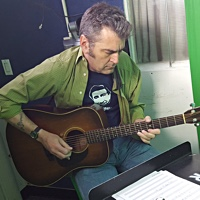
Skip Heller
Location: Los Angeles
Instrument: Guitar, electric
Born: October 4, 1965