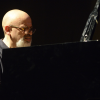
Giorgio Occhipinti

follow
STATS Rank: 1,652 Views: 8,083

Upload photos of Giorgio Occhipinti.

Born: June 12, 1969    Primary Instrument: Piano

BIOGRAPHY

Pianist and composer, was born in Ragusa in June 1969. Since he was a little child he devoted himself to the study of the piano and he played the drum and the transverse flute in a band. He also played togheter with his father (a trumpet player). In October 1989 he took part in the Festival Jazz of Paris within the “International competition for Piano jazz” dedicated to Martial Solal. He worked togheter with the actress Lidya Alfonsi, and he composed the sound basis of some of her recitals. He took part in one of the historical sicilian jazz groups: the December Thirty Jazz Trio, founded in 1989 togheter with the double bass player Giuseppe Guarrella and the drummer Francesco Branciamore. Since Juanary 1992 he has been a member of one of the most important italian groups: the Pino Minafra Sud Ensemble, many times voted in referendum from the Italian and international critics in the first places of the classifications like the best group and recording on Cd (Top Jazz “Musica Jazz”Magazine and in France the CD “Sudori” in the 1996 best CD of the year). In 1993 is a inventor togheter with Giuseppe Guarrella of the Festival Ibleo del Jazz “� a kind of general states a of the music jazz of vanguard seen from the South”. Today he is the art director of this festival. In the same year he founded the Giorgio Occhipinti Hereo Nonetto /Nonet (also octet, orchestra, ensemble). In 1994 he took part in one special group togheter with saxophonist Eugenio Colombo and Giuseppe Guarrella: the Triple project. In the 1995 he found with Joelle L�andre the EUROPEAN DUO. In the May 1998 he found with Olivia Bignardi the DUETSEQUENCES. In the March 2000 he took part of a new important group “BANLIEUES BLEUES QUARTET” created from a great festival of Paris (Banlieues Bleues) with Pino Minafra, Sandro Satta and Vincenzo Mazzone. In 1995 he has been voted by Italian critics in the referendum “Top Jazz” organised by Musica Jazz magazine as the second New and Best Talent of the year. In March 2000 he founded the GIORGIO OCCHIPINTI HEREO TENTETTO. The CD “Global Music & Circular Thought” (Giorgio Occhipinti Hereo Nonetto plus Cellos Sequences - Jazz Hal� Tonesetters) for the UK's Magazine “JAZZ REWIEWS” is the best CD of the 2001. He wrote music for orchestra and quintet of strings “I Muri a secco” edited by an important Swiss publishing house (T.G.E. edizioni musicali) after the same composition was duly pointed out in an important competition dedicated to E.Bloch. In the 1999 the ENCICLOPEDIA OF ITALIAN COMPOSERS inserts his name together to biggest names of the contemporary music. In September 1999 He found with Miriam Palma, Maurizio Maiorana, Domenico Sciajno and Giuseppe Guarrella the FAUST GROUP. From June 2001 he has been a member of the “Concerto Dantesco” with the actors Galatea Ranzi and Marco Andriolo. He wrote also sequences for cellos duo and for strings quartet (1999/2000) and he wrote also music for strings sextet plus alto sax commissioned from the Noci Europa Jazz Festival: “DODICI MOTTETTI”. He record also a double CD of this compositions with a GIORGIO OCCHIPINTI DODICI MOTTETTI. In October 2001 he found in Wien (with the collaboration of the label BEETWEN THE LINES and the festival MUSIC ON MUSIC of Wiener Musik Galerie) the group GIORGIO OCCHIPINTI GLOBAL MUSIC NONETTO and write the suite REVOLUTION (five compositions for strings quintet, two clarinets, piano, drums & kettledrums: 3 dances, 1 cantata, 1 sequence). In the June 2002 he found LESS OF FIVE with Olivia Bignardi, Giuseppe Guarrella, Antonio Moncada.

Collaborations: Evan Parker, Joelle L�andre, Ernst Reijseger, Paul Rutherford, Barre Phillips, Peter Brotzmann, Vinny Golia, Gianluigi Trovesi, Michel Godard, Giancarlo Schiaffini, Antonello Salis, Giuseppe Guarrella, Francesco Branciamore, Jean-Marc Monter�, Arkady Schilkloper, Hein Van der Geyn, Andr� Ceccarelli, Lee Konitz, Flavio Boltro, Paolo Fresu, Pino Minafra, Carlo Actis Dato, Bruno Tommaso, Vincenzo Mazzone, Ellen Christi, Stefano Maltese, Gianni Gebbia, Vittorio Villa, Enrico Fazio, Gioconda Cilio, Miriam Palma, Alberto Mandarini, Lauro Rossi, Eugenio Colombo, Renato Geremia, Giovanni Macciocu, Daniele Patumi, Antonio Moncada, Sandro Satta, Rudy Migliardi, Roberto Ottaviano, Paolo Damiani, Pasquale Innarella, Maurizio Martuscello, Gianni Coscia, Carlo Rizzo, Tscho Theissing, Ekkehard Jost, Reiner Winterschladen, Manfred Becker, Dieter Manderscheid, Joe Bonica, Roy Paci, Paolo Botti, Maurizio Maiorana, Domenico Scjaino, Filippo Portera, Carlo Cattano, Sandro Sciarratta, Vito Amatulli, Luca Calbrese, Banda Roncati, , Beppe Caruso, Lelio Giannetto, Olivia Bignardi, Tiziana Cavaleri, Galatea Ranzi, Marco Andriolo, Vittorino Curci, Giuseppe Amatulli, Domenico Mastro, Nico Ciricugno, Sonia Slany, Joanna Lewis, Matteo Gallini.

Festivals : Bolzano “Rassegna Phoenix”, Orsara “Festival jazz d'autore”, Oupeye (Belgio) “Jazz au chateau”, Zurigo (Svizzera) “Moods”, Moulhouse (Francia) “Jazz a Mulhouse edizioni 1992 e 1997”, Roma “Festival Alpheus”, Giessen (Germania) “Festival Accenti Europei 1993”, Marsiglia (Francia) “Rassegna Grim”, Avignone (Francia) “Rassegna Cher Noir”, Varna (Bulgaria) “Internaional jazz summer festival”, San Giovanni Rotondo “Jazz in Italy”, Ruvo di Puglia “Talos Festival edizioni 1993,1994,1998”, Losanna (Svizzera) “Onze plus jazz festival”, Ragusa Ibla “Festival Ibleo del Jazz edizioni 1993, 1994, 1995 e 1996”, Le Mans (Francia) “Europa Festival Jazz du Mans”, Vilshofen (Germania) “Jazz an der donau 1994”, Tivoli “Along came jazz 1995”, Antwerpeen (Belgio) “Free Music XXI”, Berlino (Germania) “Rassegna Podewil”, Wuppertal (Germania) “Jazz Spektakel”, Palermo “Seduta di musica improvvisata La Tombola”, Victoriaville (Canada) “Musique Actuelle 1995”, Berlino (Germania) “Workshop Freie Musik FMP 1995”, Noto “Itinerari della musica contemporanea 1995”, Cremona “Rassegna Progetto Jazz 1996 e 1998”, Parigi (Francia) “Banlieues Bleues 1996”, Quarrata “Border Line 1996”, Siracusa “Extra Moenia”, Queb�c (Canada) “Les Nuits Black festival”, Toronto (Canada) “Downtown jazz festival”, Vancouver (Canada) “International jazz festival 1996”, Saskatoon (Canada) “Saskatchewan jazz festival 1996”, Prato “Fabbrica jazz”, Siena “Siena Jazz 1996”, Sant'Angelo dei Normanni “The sound of jazz in Alta Irpinia”, Caltagirone “Orario Continuato”, Lipsia (Germania) “Leipzer Jazz Tage 1996”, Perpignan (Francia) “Perpignan jazz festival 1996”, La Spezia “Altrisuoni”, St.Vincent “Rassegna jazz”, Karlsrhue (Germania) “Radio Sud-West Funk”, Wacheneim (Germania) “Rassegna Badehaisel”, Mainz (Germania) “9.Internationales Akut festival”, Esslingen (Germania) “Jazz in der Dieselstrasse”, Munchen/Monaco di Baviera (Germania) “Munchener Kammerspiele”, Regensburg (Germania) “Leerer Beutel”, Salzburg/Salisburgo (Austria) “13� Int.Jazz festival”, Vienna (Austria) “Porgy & Bess”, St.Ingbert (Germania) “11� Int.jazz festival”, Torhout (Belgio) “Jazz Hal�”, Noci “Europa Jazz Festival 1997”, Parigi (Francia) “La Villette Jazz Festival 1997”, Andria “Suoni del Mondo”, Berchidda “Time in Jazz 1997”, St.Sever (Francia) “Musiques Croisees”, Bolzano “Bolzano Jazz Festival 1997”, Lentini “Sol Festival”, Rive de Gier (Francia) “Int. Jazz festival 1997”, Campi Bisenzio “Campi Jazz Festival”, Giessen (Germania) “Sechstes Heissisches Jazz Podium 1997”, Amsterdam (Olanda) “Bim Huis”, Biel/Bienne (Svizzzera) “Sputnik”, Coutances (France) “Jazz sous les pommiers 1998”, Palermo “Festival Curva Minore 1998”, Pozzallo “Festival del Mediterraneo 1998”, San Sperate “Aska jazz 98”, Posada “Posada Jazz Project 98”, Bruges (Belgio), Liegi (Belgio), Bruxelles (Belgio) “Jazz Hal� Music Days 1998”, Mainz (Germany) “11� Akut Internationales Festival 1999”, Parigi (France) Festival “Sons D'Hiver 1999”, Bologna “teatro Polivalente Occupato” 1999, Liege (Belgium) Festival “Jazz a Liege 1999”, Bruges (Belgium) “Music Days 99”, Niort (France) Moulin Du Roc Sc�ne Nationale 1999, Roma “radiotreSuite” Rai 1999, Bath (England/Uk) “Bath Festival 1999”, Liublijana (Slovenia) “Druga Godba festival 1999”, , Pontarlier (France) “Jazz en Franche-Comt� 1999”, Luz Saint Saveur (France) “Jazz a Luz 99”,Cortale “Cortale Jazz 99”, Siracusa “Siracusa Jazz 99”, Palermo “Palermo di Scena 99”, Siracusa “Parco letterario Elio Vittorini”, Pisa “Instabile's Festival 99”, Guimaraes (Portogallo) “Guimaraes Jazz 99”, Siracusa “Extra Moenia Musiche 2000”, Parigi (Francia)”Banlieues Bleues 2000”, Voss (Norvegia) “Vossa Jazz 2000”, Aalborg (Danimarca) “Uset Jazz”, Noci “Europa Festival Jazz 2000”, Mulhouse (Francia) “Jazz a Mulhouse 2000”, Palermo “Curva Minore 2000”, Guimaraes (Portogallo) “Guimaraes Jazz 2000”, Rotterdam (Olanda) “Film Festival 2001”, Cefal� “Centro culturale Italo/ Tedesco”, Palermo “Rassegna Sud Art 2001 Agricantus”, Noto “Extra Moenia Musiche Festival 2001”, Siracusa “Premio Salvo Randone”, Vancouver (Canada) “Du Maurier International Jazz Festival 2001”, S. Stefano di Quisquinia, Bruxelles (Belgio) “Music Days 2001”, Mons (Belgio) “Music Days 2001”, Bruges (Belgio) “Music Days 2001”, Vienna (Austria) “Musiconmusic”, Palermo “Goethe Institut”, Catania “Rassegna Mircoonde - ZoCulture 2002”, Luz St.Saveur (France) “Jazz � Luz 2002”, Aosta “We Want Jazz 2002”, Agrigento “Agrigentumusica Jazz Festival 2002”, Kanizsa (Yugoslavia) “Kanizsa Jazz 2002”, Belgrado (Yugoslavia) “Dom Omlandine 2002”, Noto “Extra Moenia Musiche 2002”, Vittoria “rassegna musiche”, Palazzolo Acreide “Jazz Box”, Popi “Rassegma teatro -musica”, Spello “Rassegna Sciar�”, Agrigento “AgrigentumJazzFestival 2003”, Siracusa “Convegno Europeo Pari Poortunit�”, Catania “Rassegna Statale 114 - Cappella Bonajuto 2003”, Siracusa “Antico Mercato di Ortigia 2003”, Noto “Palazzo Ducezio Sala degli Specchi”, Palermo “Palazzo Riso - Teatri Siciliani 2004”, Bruges (Belgium) “JazzBrugge 2004”

Discography:

1. “The street one year after” December Thirty Jazz Trio (Splasch Records H 329.2 1991) 2. “Concert for Ibla” Pino Minafra & December Thirty Jazz Trio (Splasch Records H 259.2 1991) 3. “Sicilian Jazz Collection vol.1” December Thirty Jazz Trio (Splasch Records 1993) 4. “The new street in old city” December Thirty Jazz Trio (Cmc Records 9931.2 1993) 5. “Live! Festival Ibleo del Jazz” Giuseppe Guarrella projects (Cmc Records 9943.2 1994) 6. “The Kaos Legend” Giorgio Occhipinti Hereo Nonetto (Leo Records Laboratory - Inghilterra 1995) 7. “Sudori” Pino Minafra Sud Ensemble (Victo - Canada 1995) 8. “Ping Pong” Vincenzo Mazzone (Leo Records Lab - England - 1999) 9. “Incandescences” The European Duo - Giorgio Occhipinti / Joelle L�andre (Jazz Hal� Records - Belgium 1999) 10. “Global Music and Circular Thoughts” - Giorgio Occhipinti Hereo Nonetto plus cellos sequences (Jazz Hal� Records - Belgium 2000) 11. “Canto Libero” - Pino Minafra Banlieues Bleues Quartetto (Victo Records - Canada 2001) 12. “Sibilla” - Giorgio Occhipinti Hereo Nonetto (Margen Magazine - Spagna 2001) 13. “Free for 3” - December Thirty Jazz Trio (Jazz Hal� Tonesetter - Belgium 2003) 14. “Histoire” - Giorgio Occhipinti Global Music Nonetto (Between The Lines - Germany 2003) 15. “Acrobati folli e innamorati” - Less of Five (9 Winds - Usa 2004)

Bibliography: “Enciclopedia dei compositori contemporanei Italiani” Pagano Edition 1999 “The Penguin Guide to jazz” di Richard Cook & Brian Morton edizionidal 1993 al 2001 Rewiews and Interwiews (Le Monde, La Repubblica, Musica Jazz, Jazz Hal�, Jazz Around, Herald Tribune, Radio-Corriere TV, ecc��).

Didactic: He is stable teacher in the courses of musical experimentation (laboratories) I in the school of music in Ragusa. Radio & Tv: Rai Uno, Rai Tre, Rai Radio Due, Rai Radio Tre, Radio and Tv Bulgara, Radio Belga, BBC Inghilterra, Radio Russa, Radio Svizzera, Radio Francese, Sud-West Funk on Germany, Radio Capodistria, Radio Olandese, Radio Danese, more USA Networks.

Theatre : CONCERTO DANTESCO Giorgio Occhipinti (piano, preparated piano, percussions, african flute) with Galatea Ranzi and Marco Andriolo (actors) and Giuseppe Guarella (double bass)

GIORGIO OCCHIPINTI - GALATEA RANZI text about the womans

Contacts FAX 0039 0932 227175 email gocchipinti@libero.it web site http://gocchipinti.supereva.it

GIORGIO OCCHIPINTI

(SUITE IN FOUR MOUVEMENTS FOR NONET: STRINGS QUINTET, TWO CLARINETS, PIANO, DRUMS & KETTLEDRUMS)

CANTATA PERP�TUEL ET HYPNOTIQUE (Giorgio Occhipinti - 2001) GLOBAL MUSIC (Giorgio Occhipinti - 2001) REVOLUTION (Giorgio Occhipinti - 2001) HISTOIRE D'UN SICILIAN A PARIS (Giorgio Occhipinti - 2001)

GIORGIO OCCHIPINTI GLOBAL MUSIC NONETTO Giorgio Occhipinti (piano, direction, compositions) Sonia Slany (violin) Joanna Lewis (violin) Nico Ciricugno (viola) Tiziana Cavaleri (cello) Giuseppe Guarrella (double bass) Matteo Gallini (clarinets) Olivia Bignardi (clarinets) Antonio Moncada (drums & kettledrums)

Giorgio Occhipinti FAX (0039) 0932 227175 email gocchipinti@libero.it

With his Global Music Nonet, Giorgio Occhipinti, the Italian pianist and composer, will shed a new light on the great tradition of Italian Old Music in a kind of 'clash of cultures' - as Claude Colpaert calls Occhipinti's endeavour to present a diverse range of musical phenomena side by side and over and under one another in a democratic coexistence.

The basic idea of Revolution is to deconstruct three historical genres of early Italian music - 'dances', 'sequences', 'motets' - and to place them in an interactive relationship with other - mainly contemporary - stimuli. Occhipinti calls his approach to the historical material a 'transversal look' at the whole, a look which is focused less on a concrete composer and his work than on the abstraction of the traditional models and the traditional forms of musical expression in order to “personalise” them - in a personalisation which is tailor-made to his own musical characteristics and preferences.

The programme of Giorgio Occhipinti Global Music Nonetto has a suite-like structure and consists of a number of intermeshing individual pieces which are developed from a contemporary platform - the composer calls them his “substance”, which feeds on new music, jazz improvisation and folklore elements.

Giorgio Occhipinti, pianist/composer, born in Ragusa in 1969, is one of the great promising talents in European jazz and has a strong predilection for composition. Born in a family of musicians, he started to play the piano, drums and transverse flute when he was still a child.

INGRID KARL and FRANZ KOGLMANN - MUSIC ON MUSIC FESTIVAL � WIEN OCTOBER 2001

My � REVOLUTION

organised chaos as musical synthesis compositions and musical fragments in the form of dances and sequences form the Revolution Suite

I have approached these forms in a very loose and open way. The music is mostly written but I have left wide margins for improvisation. The improvisation, however, is used as a method to complete and enhance the general structure of the compositions by giving it an “impromptu” character rather than just being the vehicle for the display of musical skills by the various improvisors.

The talent of the musicians that form the Global Music Nonetto gives me the privilege of relying on their creativity to lead my compositions towards territories that change at every performance and that I could not possibly crystallise in my charts. Revolution is a suite commissioned from the festival MUSIC ON MUSIC (October 13, 2001 - Wien) and from the label BETWEEN THE LINES (Germany), The theme of “Music on Music Festival” is the creation of music inspired by the music that has been composed until today. In approaching the theme of the festival I have relied on the “leitmotiv” of my life as a composer: I have tried to synthesise the various sources of inspiration that have spurred my creativity in the past. The major inspiration is the music of the 20th century. This music, however, is seen through the lens of my personal human experience shaped by my being an Italian and, in particular, a Sicilian. The feel of the Mediterranean Sea, this way, represents for me a tool to interpret and reconsider every musical form that has been created in the last century, from folk to contemporary music, from jazz to rock music, from opera to music for marching band, typical of where I come from. Often music genres so different have been deemed not reconcilable. In my personal vision, on the contrary, they meet and clash through some kind of “controlled chaos” which by juxtaposing the apparently opposite facets of those music genres allows me to show that they can be reconciled in one coherent form which reflects my musical personality. This effort to synthesise various form of music explains also the origin for both the name of my group GIORGIO OCCHIPINTI GLOBAL MUSIC NONETTO. The task behind this project is very important to me because I feel that the possibility to reconcile the various genres of music has not been explored enough.

� In my compositional process “tradition” does not represent a blueprint to copy or deconstruct �

Rather it is the entity that has shaped my development and has determined who I am today as a musician. This way the tradition - and in particular the 20th century tradition - is an example to follow in so far as it spurs the composer to search for new ways and forms of expression. My attempt is to create music that is new, the same way as composers from the past have attempted to create music that was new in their time. In my musical vision one way to create music that feels new is to juxtapose and clash music that appear very different from each other. Thus, juxtaposition and confrontation become the fuel for a new creativity. In addition, they allow to show that each attempt to categorise music is nothing but arbitrary and they provide me with the opportunity to highlight the similarities, rather than the differences, among the various music forms and genres.

In each review of my past compositions, or in each profile of my career, journalists have attempted to trace the roots of my work and have tried to look for the mould out of which I have created my music. I have to admit that I have tried this analysis myself. The result of such self-evaluation, however, has led me to believe that my music is nothing else than the continuos setting up of a “controlled clash” between the multifarious sources of inspiration that come from outside and that - after they have entered my world - start influencing each other and transforming themselves in something completely different.

I realize that words may be a flawed means to express these ideas.

GIORGIO OCCHIPINTI GLOBAL MUSIC NONETTO is only an appendix of my creative universe, one of my numerous sonorous devices, what they am all my groups that I use in the application of my artistic conceptions. Really it is my custom build groups and heterogeneous projects where sometimes I am only a composer (my sequences for duo of cellos or for quartet of arcs, my “mottetti strumentali” for stings sextet and alto sax).

My music is a gigantic living wrap, a box invaded from the declared chaos where each essence gives the impression to be out place; to the contrary all is perfectly framed in the centre of the musical discourse.

�.. From the liner notes of the CD “Revolution” (Between the Lines - Germany) My REVOLUTION, insurrection - reaction a “CREATIVE RESISTANCE” around a torpid contemporary sound system and of a part of actual music; occlusive sense of the “not perceive (not feel)” what we have had near all the time and that is able to impress and inspire you; my exclusive conception of music and of the art that transcend from the marketing and from “easy and pop” induction . Theese three compositions are a part extrapolated from a suite of more long duration ( with other two compositions) risen by a creative stimoulus that Franz Koglmannn and Ingrid Karl with the label Between the Lines gave me. This recording is like a voyage toward my intimate artistic integrity and toward revolutionary elaboration of music�Heterogeneus language and creative universe's emanations filtrated and enslaved into my exclusive code perpetually devoted to the screening of globality and circularity. “ CANTATA PERPETUEL ET HYPNOTIQUE” is a composition that aim toward the archetype of the “mottetto”�resorting to my music and all ideas that always characterized it, to my projections of music like a memory's theme, as into the vocals “mottetti” in which the melody derived from the tradition of that period, a chant not written but transmited through an oral tradition. To create the variations I used any element until an extreme limit and any single sound of my compositions or also of the improvisations that I have closed in determinate canon. “REVOLUTION” is just originated from determination to conduct toward total blast my supreme love to ancient music. A composition in two parts, two monumental rondo in which I wanted to manipulate this concept: the first is the experimantation, the second is “what is in the memory”. Revolution is writed with the canons of contemporary music but imagining quite the ancient music. The writing is very dense and it avail it-self , in this case, of a classical writing , constituted by note and value, and of a modern writing constituted by grafic representation, arches of times and directions about sounds and notes that it is necessary to use. “HISTOIRE D'UN SICILIAN A PARIS” is a composition inspired from a voyage, from my land and from the influences that it exert on me and on the world that is around. It is a form notable inserted, elaborated with progression that agree between their into an ideal centre of gravity of a musical subject. The musicians that I involved and that have been the heart with me of this project, are artist of a overhanging standard. I searched artists that have ability technical-creative and a sound absolutely coincident to my views�artists with a human greatness, with a big talent amalgamated into the art , the technique, the ingeniousness and also, probably most of all, the heart. This music can only be desired and loved; only in this way it will be able to be decoded. Otherwise it wouldn't be able to have its life. Art is devotion, consecration, love; a spiritual voyage toward own ideals. It is a inestimable projection and “subjectively objective” of a cretivity. Art and a global music are a universal language, that we, revolutionaries that imagine the essence of things, identify with vehemence and longing to know the thousand “overtoure” of the human control and creative and of the experimantation. Giorgio Occhipinti Jazz in Time La musique compos�e par Giorgio Occhipinti revendique haut et clair sa libert� artistique. M�lant musique classique europ�enne, traditions populaires, free jazz et musique contemporaine, le musicien de Ragusa m�lange les genres et les langages dans une musique sans concession, gorg�e d force et de violence � peine contenue. La musique est empreinte d'une telle beaut� �pre et violente qu'il n'est pas �tonnant qu'elle ait s�duit ce d�fricheur de terres inexplor�es qu'est Leo Feigin Claude Loxhay (Belgium) BBC Music Magazine (England) Giorgio Occhipinti has produced an astonishing amalgam of jazz both straight ahead and free, European classical and avant-garde contemporary music. Sicilian folk and italian opera without either a hint of contrivance or a whiff of arbitrary eclecticism. For variety of mood and texture , and for sheer unrestrained virtuosity, these dark yet life-affirming musical meditations are hard to beat, and should establish Occhipinti as a considerable force in contemporary. Chris Parker (England) GIORGIO OCCHIPINTI Histoire between the lines btl 033 Bringing forth a pan-European take that fits the slogan Great Music, Ancient to Future, Italian pianist/composer Giorgio Occhipinti proves with this CD that high grade improv can come to fruition with very little reference to the music's Afro-American roots. In his work with bands like his own December Thirty Jazz Trio and trumpeter Pino Minafra's Sudori, the pianist is easily able to connect to the Black Music part of the Art Ensemble slogan corrupted above, but HISTOIRE is more than that. It's an examination and evaluation of 20th Century musical currents in the form of three long compositions, the shortest of which is almost 16� minutes long. Working from his Sicilian roots, Occhipinti mixes folk, contemporary classical, banda and operatic inflections. In a way this CD is a continuation of 2000's nonet session GLOBAL MUSIC AND CIRCULAR THOUGHT (Jazz'halo TS 012), though it's even more “European”, confining the music to two reedists, one drummer and six string players including the leader's piano. Most distinctive of the pieces is the almost 19� minute “Histoire d'un Sicilien � Paris”, which begins with tango-like pizzicato from the violin, violas, cello and bass and ends with the piano and strings combining for a gavotte-like Parisian musette. In between the slurred cello portamento, extended by bass clarinet continuum, suggests an off-centre tarantella as a secondary theme. Soon the piano enters displaying dynamic clusters and hammering double syncopation to what elsewhere would be heard as proper recital timbres. Switching to march tempo Occhipinti uses that beat to reintroduce the other players -- including tingling pizzicato strings, pedal point ostinato from the bass and thunderous kettle drums. As the percussion and keys define the militaristic bottom, hectoring, bass clarinet lines move polyrhythmically into wiggling coloratura. More than halfway through, the pianist adds another theme that plays itself out in piano jazz syncopation with an overlay of slurred soprano saxophone lines. Finally, speedy, shrill strings reach a chamber orchestra-like crescendo which prefaces the light, musette-like theme. With a reoccurring and transforming rhythms, the writing on “Cantata perpetuelle et hypnotique” at points resembles Anthony Braxton's Ghost Trance Music with its perpetual motion. Potentially almost completely through-composed, the tune, based on mottetto or Roman Catholic liturgical music, finds each section advancing motifs, then giving way to counter motifs. Before the variations morph into something that sounds like romantic string writing, there's a point where the strings and horns appear to trade fours in jazz fashion. Picking up the initial ancient-to-future representation, “Revolution” is a two-part rondo that manipulates a dense, graphic composed score to subvert the ancient form with modern overtones. Here pedal pressure emphasized piano chords double and triple in tempo, the better to modulate romantic string lines into discordant higher registers. Reedy soprano saxophone sounds bring the piano lines down to a mid-tempo that soon turns atonal and appends complex, contrasting dynamics. The canine-like reed snarls subverting the piano passages mirror what Occhipinti's piano was doing viz a viz the strings earlier on in the first movement. At this point the violins, viola and cello recapitulate the rondo as kazoo-like squeals from the horn almost, but not quite, upset the form. In the end, coloratura trills and wheezes re-enter stage left from the horns along with some trick-tocking piano chords. Keeping one hand in tradition and one in experimentation, the Sicilian pianist has proven once again that he's someone to which close attention must be paid. To fully understand the evolution of European improvised music, Occhipinti is someone to be heard. -- Ken Waxman Track Listing: 1. Cantata perpetuelle et hypnotique 2. Revolution 3. Histoire d'un Sicilien � Paris Personnel: Matteo Gallini and Olivia Bignardi (soprano saxophone and bass clarinets); Sonia Slany and Joanna Lewis (violins); Nico Ciricugno (viola); Tiziana Cavaleri (cello); Giorgio Occhipinti (piano); Giuseppe Guarrella (bass); Antonio Moncada (drums and kettledrums)

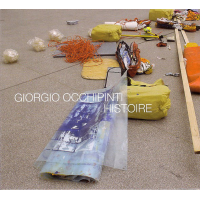
Giorgio OCCHIPINTI HISTOIRE Between the Lines BTL 033

Projet ambitieux que ce-lui du pianiste Giorgio Occhipinti qui propose ici trois longues com-posit�ons pour quatuor a cordes (Sonia Slany - vln, Joanna Lewis -vln, Nico Ciricugno - viola, Tiziana Cavaleri - cello), piano (lui-m�me), sopranos et clarinettes basses (Giuseppe Guarrella et Matteo Gallini), contrebasse et batterie (Antonio Moncada). Enre-gistr�e a Vienne en octobre 2001, la musique de ce disque est le fruit d'une �criture qui, bien qu'enracin�e dans la tradition classique, reste r�solument moderne. Cantata perp�tuelle et hypnoti-que n'atteint pourtant pas, a mon sens, la hauteur de son ambition, entach�e de passages parfois un peu trop... d�goulinants. Nette-ment plus hirsute, originale et foisonnante, la composition Revolu-tion, bas�e sur des part�t�ons classi-ques et graphiques, s'avere bien plus libre et ouverte, sorte de che-vauch�e d�brid�e qui d�cape admi-rablement l'oreille. Mais le tr�sor de ce disque, Histoire d'un Sicilien a Paris, distille un th�me d'une beau-t� limpide, fortement sensuelle : une composition qui respire (on sent souffler sur nos nuques inspi-rat�ons retenues et expirat�ons sauvages), qui explose de vie. Inserite a la lisi�re des genres (contemporain, musique de cham-bre, jazz libre...) o� les r�ussites, il faut bien se l'avouer, ne sont g�n�-ralement pas l�gion, cette pi�ce rev�t un caract�re sublime. Bravissimo !

Mare SARRAZY (IMPROJAZZ APRIL 2004)

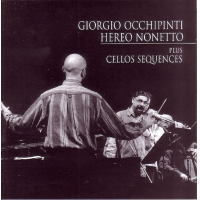
“Histoire” (Between the Lines 033/EFA 63834), inciso a Vienna da Giorgio Occhipinti (ottobre 2001). Anche qui da spina dorsale funge un quintetto con due violini, viola, cello e contrabbasso, ma a integrarli, oltre al piano del leader, ci sono due ance e batteria. Tre soli i brani che lo compongono, ammirevoli specie per lo sforzo compositivo che vi si coglie, e che colloca l'opera in un'area assai prossima alla musica contemporanea di matrice eurocolta. I percorsi sono per lo pi� nervosi, frammentati, crepitanti (con un finale, per�, pi� docile, quasi elegiaco), per un lavoro sicuramente ammirevole. Dall'articolo “GIMKANA DISCOGRAFICA” di Alberto Bazzuro (Italia) per il bimestrale RITMO nella sezione Zone Limitrofe ALL ABOUT JAZZ Global Music and Circular Thought Giorgio Occhipinti Hereo Nonetto plus Cellos Sequences (Jazz'halo - Belgio - 2000) Francesco Bigoni Jazz, classica contemporanea, poesia e folklore di sapore mediterraneo: Giorgio Occhipinti fonde nella sua musica questa molteplicit� di linguaggi con facilit� e leggerezza disarmanti. Il tentativo di creare una produzione che esca dallo schema dei generi, per certi versi limitativo, � stato pi� volte perseguito in varie forme nel corso della storia musicale europea. La lettura di Occhipinti sembra propendere verso l'indefinito e il transitorio, in un processo creativo che libera i generi, rendendoli quasi i “colori” di una tavolozza da cui attingere continuamente. � forse questo un esempio di musica totale? L'autore ci dice di s�. Difficile rispondere. Il risultato � pretenzioso, ma senza dubbio di notevole spessore artistico. Questo album ha per sottotitolo Suite in Eight Movements: Dances and Sequences for Cellos and Nonet. Raccoglie infatti in una suite di otto movimenti alcuni tra i suoi ultimi lavori; quattro danze, affidate all'Hereo Nonetto, inframmezzate da altrettante sequenze per due violoncelli, di pi� recente composizione. L'ascolto chiarisce puntualmente il concetto di “pensiero circolare” espresso nel titolo; nelle composizioni di Occhipinti a rincorrersi in cicli di due, quattro, otto misure sono linee melodiche dissonanti, altre cantabili, echi jazzistici e stravinskiani (e di Stravinskij vengono recuperati il dinamismo, l'interesse ritmico, l'andamento danzante; si ascolti soprattutto “Allegro Ibleo Con Ninna Nanna”), cantilene sognanti che affondano le loro radici nella Sicilia, crocevia di culture e linguaggi al centro del Mediterraneo. L'orchestrazione manifesta gli stessi segni; le linee principali sono affidate alternativamente agli archi, al pianoforte o ai fiati, spesso raddoppiati dalla voce dell'ottimo Maurizio Maiorana, che, oltre a creare un pregevole impasto, quasi ci ricorda che questa musica, pur nella sua complessit�, non perde mai di vista la melodia, il canto. L'impatto sonoro del nonetto � straordinario, il clima torrido, palpabile, sostenuto, tra gli altri, dal fido collaboratore Francesco Branciamore e da un dolphiano Carlo Actis Dato; discorso a parte meritano le sequenze per violoncello, eseguite da Tiziana Cavaleri e Vito Amatulli, in cui l'atmosfera si fa al contrario eterea, sospesa. Le complesse tessiture ritmiche e armoniche si intrecciano sotto il rigido controllo del pianista e compositore, che sembra prediligere il ruolo di piano conductor rispetto a quello di solista, pur ritagliandosi qualche spazio personale di notevole intensit� espressiva, come in “La genesi del kaos”. Occhipinti sembra incline al predominio della scrittura sull'improvvisazione; o forse sarebbe pi� esatto parlare di Global Music in altri termini, visto che il procedimento dell'autore tende ad eliminare ogni schematizzazione. Niente pi� scrittura e improvvisazione, soltanto genesi spontanea. Cos� in “Allegro Ibleo Con Ninna Nanna”, ad esempio, i momenti improvvisativi, affidati all'ottimo Lauro Rossi al trombone o all'intero collettivo, si fondono con la audace e vigorosa scrittura del leader. A suggello di un disco magistrale per condotta artistica e coerenza due piccoli saggi di poesia, i testi di Ermelinda Simona Buccheri, cantati dalla voce cullante di Maurizio Maiorana, sospesi tra il sentimento nostalgico per le radici e la sfera dell'onirico. Valutazione: * * * * * Giorgio Occhipinti - Hereo nonetto Plus Cellos Sequences - 1 CD Jazz'halo TS 012 (from http://www.multimania.com/jazzosphere/cdnew.htm#CDs%202001) On se souvient de l'album “ Incandescences “ qui nous avait permis d'appr�cier les prestations de Giorgio Occhipinti. En duo avec Jo�lle L�andre, le pianiste nous avait d�j� montr� ses qualit�s musicales. L'enregistrement qu'il nous propose ici nous a subjugu� d�s la premi�re �coute. Giorgio Occhipinti se propose en huit pi�ces de sa composition de nous faire voyager dans une musique po�tique, �vanescente et en m�me temps tr�s pr�sente et ancr�e. L'album est men� par des morceaux jou�s en duos de violoncelle et par des pi�ces interpr�t�es par neuf musiciens. Ces m�langes cr�ent des atmosph�res diff�rentes et compl�mentaires comme si les musiciens s'appelaient l'un l'autre. Cet album a �t� enregistr� dans une ferme sicilienne isol�e. Le lieu rev�t ici toute son importance. Il est comme une trace de la tension des musiciens qui se livrent � un jeu entre utopie et r�alit�. L'inconscient laisse peu � peu sa place � une conscience pleine de promesse ; il se d�lie pour aller vers la cr�ation et affirmer un espace musical de plus en plus omnipr�sent. La tension monte, les phrases se nouent et les notes se tissent � travers un �change qui ne cesse de se complexifier. Cet album agit comme la source qui nous apaise et nous montre en m�me temps un au-del� qui n'�tait jusqu'alors qu'esquiss�. GIORGIO OCCHIPINTI Hereo Nonetto Plus Cellos Sequences Jazz'halo TS 012

(http://www.jazzweekly.com/reviews/gocchipinti_hereo.htm) Young Sicilian pianist Giorgio Occhipinti describes the sound on this CD as global music, but it certainly has little if anything in common with what most call world music. Instead the suite he has written for this nonet reflects his version of global music: a mixture of opera buffa, Italian folk and marching songs, romantic pop, so-called classical music and a large parcel of jazz improvisation. Nomenclature be damned, however. Global Music is a stirring showpiece for the pianist's compositional skills that, in four lengthy compositions, utilize every one of his influences, flinging them together in a dense -- and very palatable -- mass. Separating the orchestral blow-outs are four miniature and airy dual-cello interludes, which serve the same purpose an amuse-gueule of sherbet does between courses in a hearty French meal: as an airy interlude to set you up for the substantial fare to follow. Theatrical and splashy as only someone hailing from the birthplace of opera can be, Occhipinti's major compositions have a certain heft to them, and are decorated with the many orchestral colors he has available to him with nine plus instruments. The plus is Palermo-born clarinetist Maurizio Maiorana, whose tenor singing voice is used for little arias, both wordless and with Italian lyrics. Whether you understand the language or not is unimportant, since the key to those songs is the vocal blend with the tunes and instrumentalists. And what sounds they produce. During the course of “Allegro Ibleo Con Ninna Nanna,” for instance, the disc's showpiece at nearly 26 minutes, the tempo shifts from march to swing to free to jig and back again. Philharmonically-voiced string and horn passages follow a straightahead jazz motif with carefully accented snare and cymbal zaps and bop piano runs, Earlier passages move among raucous gutbucket trombone, quasi-Dixie high-note trumpeting and the clarinets' approximation of a tarantella. From time to time the dramatic Maiorana asserts himself, switching from a soaring operatic pitch to lyric reading that approximates a Virgilian Jacques Brel. It does help, of course, to have some of the country's most accomplished musicians on board here. Trombonist Lauro Rossi, like Occhipinti and bass clarinetist Carlo Actis Dato a member of trumpeter Pino Minafra's all-star Sudori combo, can measure the bar lines in strict tempo with a proper sound as easily as he plays freely. Reed madman Actis Dato, who is also known for his contributions to the Italian Instabile Orchestra and his own bands, is never at a loss for notes or ideas. Violaist Paolo Botti can put a folksy sheen on his tone on “Canone,” then seemingly effortlessly soar over the massed ensemble as he does on “Danza Del Canto Supremo.” One minute trumpeter Luca Calabrese, who first learned his trade in a wind banda, is making like an Italian Cat Anderson on “La Genesi Del Kaos,” pushing higher and higher notes out of his horn. Shortly afterwards he's amplifying the Latin motif of “Canone” to such an extent that you next expect someone to yell “cha cha cha.” Despite its title, that tune, which is lively from beginning to end, comes across with a boogaloo beat following an introductory theme, that could be used on a TV cop show. While chaos may be created with blended horn section explosions and the many free passages -- not to mention Siracusa-based drummer Francesco Branciamore's apocalyptic kettledrums on “La Genesi Del Kaos,” some of the earlier compositions switch between parade rhythms and Kurt Weillian-style waltz time. Occhipinti is no slouch as a pianist either. When he takes centre stage, he can easily create some flowing Herbie Hancock-like contemporary keyboarding. Elsewhere he caresses compositions with right-handed glissandos. A number of impressive European and North American orchestral projects have been released recently. With his creative mixture of inspiration, swing, humor and high musical standards, the pianist's disc certainly deserves to take its place near the top. Ken Waxman JAZZ HALO' (BELGIO) 1998 Giorgio Occhipinti ou le choc des cultures “Vivaldi meets the AACM”: la formule, due � Kalamu ya Saalam (Jazz Times U.s.a.), est certes r�ductrice, mais elle dit bien l'amplitude du champ esth�tique couvert par le pianiste et compositeur Giorgio Occhipinti. Il a le go�t des structures musicales les plus classiques, mais aussi celui de l'imporvisation la plus d�brid�e, et il ma�trise et surtout il habite tout ce qu'il touche, que ce soit en tant qu'interpr�te de la musique des autres (Pino Minafra Sud Ensemble), en tant qu'instrumentiste (au sein du December Thirty jazz Trio et en duo avec Joelle L�andre) ou en tant que cr�ateur et animateur de son propre univers (Giorgio Occhipinti Hereo Nonetto). L'interpr�te. Giorgio Occhipinti, n� en juin 1969 � Ragusa en Sicilie (o� il r�side toujours), a �tudi� tr�s jeune le piano. On le remarque qu concours de panistes parrain� par Martial Solal et organis� � Paris en 1989. La m�me ann�e, il fonde le December Thirty Jazz Trio, avec le contrebassiste Giuseppe Guarrella et le batteur Francesco Branciamore. En 1992, il se joint au groupe du trompettiste Pino Minafra. A l'ecoute de “Sudori” (1), on se rend compte des qualit�s d'adaptation du pianiste, interpr�te au sens le plus complet du terme, c'est-�-dire qu'il traduit et d�veloppe � sa fa�on les intertisions du leader, volontiers expanisves: n'oublions pas que le trompettiste joue �galement du porte-voix, d'une mani�re qui n'est pas sans �voquer le cirque de Fellini, � qui est d�di� d'ailleurs le Tango de “Sudori”. Occhipinti est � la fois respectueux de la forme musicale et inventif, car il n'h�site pas � pousser le principe du tango jusqu'� le ressasser, puis � le dynamiter. C'est valable pour d'autres structures (la marche de Quando Dormi). Pianiste et trompettiste sont en osmose m�lodique et improvisatrice: volubilit� latine, d�flagrations free. C'est l� une des cl�s de l'univers de Giorgio Occhipinti: la coexistence chez lui du respect de chaque langage musical et de la coscience de son n�cssaire d�passement par l'improvisation free. Cela explique les partenaires qu'il s'est choisis ou qui l'ont choise au cours de sa carri�re jeune et n�anmoins remplie. On y trouve aussi bien Lee Konitz, Paolo Fresu ou Hein van der Geyn que des musiciens plus spontan�ment proches d'un art “brut”, comme Peter Brotzmann ou Evan Parker. Le pianiste. L� encore, on serait tent� de d�crire le jeu de Giorgio Occhipinti en tant que r�union des extr�mes, avec d'un c�t� l'influence de la musique classique, pouvant aller du baroque de Bach jusqu'� Messiaen, et de l'autre l'engouffrement dans un maelstr�m improvis� fa�on Cecil Taylor. Le toucher du pianiste a sans doute acquis sa densit� et sa pl�nitude par des ann�es de pratique instrumentale classique. L'influence de Taylor, si elle est �vidente, ne va pas jusqu'� l'obsession, et se conjugue davantage en des emportements passagers, plut�t que de se perp�tuer en un flot continu. On est �galement assez loin des citations parfois faciles d'un Keith Jarrett. D'abord parce que le toucher de Giorgio est compl�tement diff�rent, plus sombre, plus profond, plus rond, m�me s'il est aussi capable de s'envoler en cascades de notes cristallines, par exemple dans La Sosta (2). Ensuite. Le recours au classique n'est pas, comme souvent chez Jarrett, un jeu de citations, mais il est l'expression personelle d'une part de la culture de Giorgio Occhipinti, qui surgit au moment opportun. On peut risquer une m�taphore arch�ologique, comme nous y invite le “Concert for Ibla” (3), li� aux occupations successives, grecques, romaines, arabes, espagnoles, etc, de ce village sicilien. Il y a dans le jeu du pianiste comme des strates s�dimentaires, qui affleurent tour � tour � la surface. D'o� ces transitions � l'int�rieur des th�mes, la plage de repos classique de Lampadina(2), au milieu d'une pi�ce plut�t rythmique, ou l'introduction baroque de Antitango (4), avant le d�ferlement free. La succession de styles diff�rents, qui fait le discours musical de Giorgio, est un jeu d'alternances, c'est l'antith�se des tentatives de fusion classique/jazz du Third Stream. “La musicque, c'est la libert� totale d'expression des sentiments de quelqu'un, l'exploration de ses racines int�rieures. La musique est probablement la forme d'art qui est la plus apte � s'�chapper � un moment donn� hors des sch�mas rigides et � utiliser � un autre moment ces m�mes sch�mas l� o� ils sont n�cessaires. (�) Mon travail est le r�sultat de mon exp�rience personelle: la musique classique europ�enne, la musique contemporaine, la musique folklorique sicilienne, le jazz, l'op�ra italien, le free am�ricain et europ�en et l'histoire de mon pays.” (livret du cd “Kaos”)(4). Le December Thirty Jazz Trio, comme son nom l'indique, est la part la plus “jazz” de l'oeuvre du pianiste, prenant parfois des voies rythmiques ou m�lodiques, profitant de l'�galit� des r�les au sein du trio, m�me si le groupe a plus � voix avec l'atonalit� d'un Paul Bley qu'avec le mod�le d'un Bill Evans. L'European Duo, qui associe Giorgio Occhipinti � la contrebasse de Joelle L�andre, joue davantage la carte de la spontan�it�. A en juger par les extraits de concerts que j'ai entendus (en attendant le cd annonc�), Joelle et Giorgio partagen en toute connivence l'aptitude � �tre instantan�ment pr�sents dans les musiques les plus vari�es, qu'elles soient libres ou �crites. Le Leader. Mais, jusqu'� pr�sent, c'est l'Hereo Nonetto qui donne peut-�tre le t�moignage le plus convaincant de l'universe de Giorgio Occhipinti. On y rencontre toujours ce m�me sens des contrastes. Rien � voir avec l'�clectisme de l'Italian Instabile Orchestra, qui juxtapose diff�rents compositeurs. Bien qu'il permette les envol�es individuelles, le nonet de Giorgio (4) est avant tout l'extension de sa seule volont�: d�clinaison classique par le recours aux cordes, amplification du kaos free par le recours au collectif. Les dualit�s de Giorgio Occhipinti trouvent ici leur justification. Elles traduisent tr�s ouvertement le choc des cultures, dans son expression la plus dramatique, en r�f�rence au conflit yougoslave (Abaca: danza per Sarayevo). “The Kaos Legend” se termine d'ailleurs par le son des sir�nes d'alarme. C'est que Giorgio Occhipinti est un humaniste. Et surtout, c'est un musicien qui est parvenu avec l'Hereo Nonetto � aller au del� des contradictions apparentes de ses �ducations musicales. Les transitions sont riches et complexes, ne jouent plus syst�matiquement sur cassure entre les styles mais au contraire s'enchev�trent, utilisant l'usure, rel�chement du rythme en valse (Abaca), effets de relief obtenus par une combinaison � chaque fois diff�rente des des groupes d'instruments. La place nous manque pour d�ttailler davantage les nombre ses activit�s de Giorgio Occhipinti, qui a compos� pour orchestre et quintet � cordes, fait partie d'un autre trio, le Triple Project, avec Giuseppe Guarrella et Eugenio Colombo, est le directeur artistique du festival Ibleo del Jazz� Je crois que ce qui pr�c�de suffit � montrer que nous sommes en pr�sence d'un musicien important, et d'un homme chaleureux, dont nous n'avons pas fini de vous parler Claude Colpaert

tratto dal sole-24 ore Domenica 20 Agosto 1995 “Il giovane jazz italiano di Occhipinti e Fresu”

La vera sorpresa, quasi una rivelazione, � “The Kaos legend” (Leo Lab 012, distribuzione Ird). La casa discografica che lo ha pubblicato � britannica e, prima ancora che il compact arrivasse da noi, gi� era stato oggetto di un autentico peana sull'austera rivista musicale della Bbc, l'emittente pubblica di lass�. In Inghilterra, non senza qualche diritto, considerano questa scoperta un merito tutto loro, ma a inventare, organizzare e dirigere quella musica, � stato un musicista italiano, uno dei pi� nuovi (ha soltanto ventisei anni ed � quasi esordiente). Si tratta del pianista siciliano Giorgio Occhipinti” di Gian Mario Maletto

Europa Jazz Festival di Noci (Italia) Giugno 1997

Dalla Sicilia provengono alcuni dei maggiori talenti espressi dal jazz italiano negli ultimi dieci anni: � il caso del pianista compositore Giorgio Occhipinti, noto per la sua militanza nel Sud Ensemble di Pino Minafra (Sudori) e soprattutto per il suo progetto Hereo, emerso nel 1994 con un compact disc pubblicato dall'etichetta inglese Leo Lab (The Kaos Legend) ed una serie di concerti nei maggiori festivals europei. A 28 anni Occhipinti � gi� in possesso di un invidiabile bagaglio musicale: forte di studi classici che danno solide basi alle sue improvvisazioni pianistiche ed alle sue composizioni, egli ama lavorare intorno ai materiali della tradizione siciliana per restituirli completamente trasfigurati all'interno di un universo jazzistico che ha metabolizzato la tradizione boppistica ed il radicalismo delle avanguardie. La sua � musica di sintesi, tra le pi� stimolanti emerse in questi ultimi anni di crescita e di fervore creativo per tutto il jazz italiano.(...) L'universo espressivo di Occhipinti � estremamente solare, di una solarit� violenta e non riconciliata dove l'espressionismo allunga smisuratamente le ombre sui muri e deforma i volti in ghigni beffardi. Queste sue caratteristiche, unite ad un approccio allo strumento che fonde l'aggressivit� free di Cecil Taylor alle tecniche accademiche, insieme alle sue doti di organizzatore di un gruppo ricco di individualit� e capace di utilizzare disinvoltamente tromba, trombone, clarinetti ed archi, come l'Hereo Nonetto, rendono la sua “The Kaos Legend” una ricca e affascinante costruzione musicale.(...) Fabrizio Versienti (Italia)

Jazz - July 1995 (U.S.A.)

Occhipinti arranges the idiomatic mix with purpose and notable dexterity, never allowing the suite to degenerate into simply another fashionable exercise in superficial eclecticism. Still a mere 25 years of age, this ambitious young composer, arranger and pianist is clearly a major talent in the making”

Chris Blackford

IMPROJAZZ 1996 (Francia)

Occhipinti est ordinairement un compositeur original et �l�gant (une �criture entre l'esprit des bandas, Stravinsky et les explosions du free-jazz: grande vari�t� de climats et de textures, utilisation intelligente des cordes, etc). Son duo (presque) totalement improvis� avec la maitresse de la contrebasse qu'est Joelle L�andre constitua en revanche l'un des joyaux du festival: lyrisme, d�pouillement, pr�cision, sens de l'interplay (on dit qu'un CD devrait prochainement c�l�brer cette union) Gerard Rouy

By the Penguin Guide to Jazz (England 1995) Occhipinti himself is not a dramatic soloist. Though he does often generate considerable volume against the full ensemble. His style is difficult to pin down which is probably a good thing. Do try the Kaos legend. It is one of a kind.. Musica Jazz (Maggio 2000)

... Il Giorgio Occhipinti Hereo Nonetto, con una performance mozzafiato, ha presentato un nuovo lavoro finito di registrare appena due giorni prima.Questo concerto ha consentito di verificare gli enormi progressi compiuti dal trentenne pianista e compositore ragusano, pi� apprezzato e richiesto forse nell'Europa centrale che non in patria. Oltre sei anni sono passati da “The Kaos Legend”, sinora unico album del nonetto. Oggi le parti scritte prevalgono nettamente su quelle improvvisate, e anche quando i solisti si lanciano in vibranti assoli la loro libert� � perennemente condizionata dall'articolato sottofondo. Si sono ascoltati quattro lunghi brani raccolti in una suite che si trover� sul CD la cui uscita � prevista in ottobre per la belga Jazz'halo. La scrittura di Occhipinti lascia poche pause ai musicisti, sacrificando il suo stesso pianoforte, utilizzato quasi esclusivamente come collante nel dialogo-scontro tra fiati, archi e ritmi. Un altro punto di forza della formazione � il sapiente ecclettismo di Maurizio Maiorana, clarinetto e voce. E' una vocalit� d'impostazione classica la sua, ma coraggiosa e sperimentale quanto basta per dare il giusto spessore interpretativo ai testi di Ermelinda Simona Buccheri: un procedimento che ricorda quello utilizzato da Steve Lacy con larghe formazione comprendenti Irene Aebi... Claudio Don�

Mainzer Rheinzeiming (Germany) (25/01/99)

Italianische Gro�formation als H�hepunkt beim elften AKUT-Festival im Frankfurter Hof - Performance verungl�ckt Virtuoeser Umgang mit Material aus der Musikgeschichte und ein uns�glicher per-formance - Auftritt sorgten f�r die st�rksten Eindr�cke beim elften Akut-Festival. Musikalischer H�hepunkt an diesem zweiten, ebenso unterhaltsamen wie gehaltvol-len Konzertabend war das italianische Hereo Nonett um der Pianisten Giorgio Occhi-pinti. Da kristallisiert sich aus dem Orchester schon mal ein Streichtrio heraus, das romantische Weisen spielt, dann setz pl�tzlich das Gebl�se ein, spielt Kirmesmusik, und schlie�lich wird gemeinsam geswingt und gejazzt. Dazu kn�delt gelegentlich Maurizio Maiorana, oder Carlo Actis Dato l��t per Ba�klarinette kommentare ab. Verdi goes Jazz, canzona goes Blues - und zum Bl�serjazz donnern Kesselpauken. Allenfalls das Vienna Art Orchestra, eine der wenigen europ�ischen Gro�formatio-nen, hat bisher �hnlich vielseitig und verspielt aufgetrumpft. Werner Wenzel

RheinMain Presse (25/01/99)

GRENZ�NGER ZWISCHEN BELCANTO UND JAZZ Der zweite Festival-H�hepunkt, das italienische GIORGIO OCCHIPINTI HEREO NONETTO, machte das mehr als deutlich . In floskelhaften K�rzeln montierte es eine kleine Musikgeschichte des 20. Jahrhunderts zusammen, von Igor Strawinsky zu George Gershwin, von Frank Zappa zu Cecil Taylor, italienische Volksweisen und opernhaftes Belcanto. Das Nonett vermochte es, sich zu �ffnen und zu schlie�en wie eine wunderbare Blume: Gro�orchestrale Soundtracks trafen auf den Jazz-Solisten, ein Streichquartett auf die Bl�sercombo, nahtlos, atemlos. Bot Occhipinti eine atmosph�rische Nachdichtung , so widmeten sich andere dem klischierten Versatzst�ck. Von Stephan A.Dudek

Frankfurter Rundschau (Germany) (26/01/1999)

Neun kleine Italianer stehen da auf der B�hne, sie h�mmern und streichen und zupfen auf ihren Instrumenten, sie blasen und husten in sie hinein, und irgendwie scheint es, als sei alles erlaubt. Es mu� nur Groove haben, und es mu� Spa� machen. Also bedienen sie sich bei allem, was die Musikgeschichte so an Genres und Idiomen zur Verf�gung stellt, zerlegen die gefundenen St�cke in ihre Einzelteile, kleben sie neu aneinander und basteln sich so ein frisches, unbek�mmertes und unverbrauchtes Vokabular, mit dem sich Musik machen l��t, von der man eigentlich nur tr�umen kann. Musik, die alles aufsaugt, was sie finden kann, die den Jahrmarkt und den Free Jazz, die Sizilianische Folklore und amerikanischen Funk, Nino Rota und Igor Strawinsky zusammenzwingt und am besten klingt, wenn die Mischung nicht pa�t, sondern herrlich schr�g und quer t�nt. Giorgio Occhipinti Hereo Nonetto hie�en die Virtuosen des eklektizistischen Flickenteppichs, die den zweiten Tag des Akut-Festival f�r zeitgen�ssische Musik in Mainz er�ffneten. Es sollte die beste Stunde im Frankfurter Hof gewesen sein, die Dichte und Leichtigkeit, die Offenheit und Vielfalt blieben unerreicht. Dabei war das Patchwork, die bunte Melange, ein Leitmotiv an diesen zwei langen Tagen. Nur konnte keiner die Vorgabe der irrwitzigen Italiener einl�sen. Von Tim Gorbauch

Giorgio Occhipinti Hereo Nonetto in the Akut festival in Mainz 1999 Nieder-Olm, 28.01.1999

Neun Italiener stehen hinter ihren Notenst�ndern auf der B�hne des Frankfurter Hofes in Mainz - mit s�dl�ndischem Temperament und �berbordendem Humor. Die Ba�klarinette schnalzt, die Violine weint, der Kontraba� marschiert, das Piano perlt in melodi�sen L�ufen, Posaune und Trompete sto�en fanfarengleich hervor, wie einst die Blechbl�ser vor Jericho. Erlaubt ist, was Spa� macht. Und so r�hrt das Nonett um den Pianisten und Komponisten Georgio Occhipinti die Epochen der Musikgeschichte und die Musikkulturen der alten und der neuen Welt v�llig unbek�mmert zusammen. Gerade erfreut sich der Zuh�rer an einem klassischen Jazztrio mit Piano, Ba� und Schlagzeug in bester Mainstream-Tradition, da leitet der Pianist mit Unterarm-Clustern und harten Akkorden zu Cecil Taylor �ber, f�ngt das Schlagzeug an, zu pulsieren. Das Trio-Spiel treibt auseinander bis die Bl�ser sich mit kraftvollen St��en Bahn brechen, das Fl�gelhorn mit vibratoreichen Linien ins Solo einsteigt. Dann pl�tzlicher Stimmungswechsel: die Band gleitet in eruptive Free-Jazz-Passagen ab. Das Chaos strukturiert sich langsam und endet in einem dunkel timberierten sinfonischem Finale. Aus einem Requiem entwickelt sich eine Opernadaption, Nino Rota trifft George Gershwin und Igor Strawinsky, der Belcanto-Gesang von Maurizio Maiorana liegt �ber sizilianischer Folklore, Free-Jazz vermischt sich mit Jahrmarktsmusik. Und doch ist kein st�render Bruch in dieser Melange, die in Teilen mehr �berraschungen und Klangf�rbungen, sowie trotz teilweise weitgehender Arrangements erfrischende Spontanit�t aufweist, als der Freund des zeitgen�ssischen italienischen Jazz etwa vom Orchester des Trompeters Pino Pinafra her kennt. Sie �berzeugen alle: Luca Calabrese (Trompete, Fl�gelhorn), Lauro Rossi (Posane), der immer zu Sp��en aufgelegte Carlo Actis Dato (Ba�klarinette), Paolo Botti (Violine), Vito Anatuli (Cello) Giuseppe Guarella (ba�), Francesco Branciamore (Schlagzeug), Maurizio Maiorana (Klarinette und Gesang) sowie Bandleader und Pianist Giorgio Occhipinti. Allenfalls in fr�heren Aufnahmen des Vienna Art Orchestras war �hnliches zu erleben. Es war f�r die anderen Gruppen naturgem�� schwer, sich nach diesem glanzvollen Auftritt des Giorgio Occhipinti Hereo Nonetto beim Akut-Festival des Vereins Up-Art in Mainz zu behaupten. Klaus M�mpf Jazz Podium (Germany) (1999)

Carrefour du Sud (1998)

Giorgio Occhipinti Hereo Nonetto Compositions riches et complexes dans lesquelles on sent qu'est assimil�e toute l'histoire de la musique occidentale, de Bach � Berg ou Prokofiev, mais �galement un puisement dans les sources populaires les gammes orientales, et bien s�r le jazz. Cette musique allie une recherche tr�s pouss�e dans l'�criture (harmonie, rythmes, timbres), et l'espace de libert� qu'est l'improvisation tant�t lyrique, �pre ou violente. A �couter : “The kaos Legend” - “Live a Cremona 98”.

Perpignan Jazz Festival (France)

Il Manifesto (30/5/1995)

Nella musica di Occhipinti la Sicilia diventa un ideale crocevia per musiche europee, americane, africane, dal folklore al jazz passando per l'opera e la musica contemporanea

Luigi Onori (Italia)

Jazz Times (USA) 1996 Giorgio Occhipinti Hereo Nonetto The Kaos Legend

Vivaldi meets the AACM. Pianist Occhipinti mixes classical music motifs with genre-busting solos in this literally Eurocentric take on AACM style creative music. This nine-piece ensemble is much more hot-blooded than typical Third Stream music, although not as bluesy as the Chicago cats. All of the musicians acquit themselves as they are obviously technically proficient and, within their idiom, offer passionately declaimed solos.

Kalamu ya Salaam

IMPROJAZZ (France 1995)

The Kaos legend est en quelque sorte le point de rencontre de differentes cultures venues de sa terre natale, la Sicile, mais aussi des pays et r�gions qui l'environne, avec des r�f�rences peut-etre evidentes mais aussi solidement ancr�es dans son esprit creatif.

Philippe Renaud

Pino Minafra Le samedi 22 septembre 2001 Chant anim�

Apr�s s'�tre adonn�, ces derni�res ann�es, � des exp�riences plus formelles aupr�s, notamment, de son Sud Ensemble et du Keith Tippet Tapestry, le trompettiste italien Pino Minafra revient � ses premi�res amours : l'impro brute. Entour� de Sandro Satta (saxo alto), de Giorgio Occhipinti (piano) et de Vincenzo Mazzone (batterie, percussions), il nous propose Canto Libero, enregistr� live aux Banlieues bleues de Paris. Une musique d�coiffante et d'une beaut� sauvage. Si mobile et si visuelle qu'elle renvoie presque au film d'animation. L'expression est compl�tement libre, free � l'extr�me. Cette rencontre au sommet n'en exclut pas moins tout bruitisme gratuit. Au fil des six titres, chacune des notes c�l�bre l'instantan�it� d'un imaginaire collectif et complice, puis vient se fondre dans un flux commun d'o� surgissent des harmonies puissantes et inattendues, parfois d'un lyrisme flamboyant. En s'offrant un champ aussi ouvert, les protagonistes se donnent toute latitude pour explorer sans contrainte une multitude d'�tats d'�me, passant d'une profondeur quasi gothique (Terra Rossa) � un ludisme raffin� (El Zorro). Entre les deux, une d�ferlante de spontan�it� d�fiant les param�tres d�finis et les discours convenus. Tout �a port� par des musiciens puissants et g�n�reux, la trompette et le bugle de Minafra se livrant � un jeu incessant du chat et de la souris avec le saxo alto de Satta, tandis qu'Occhipinti d�ploie son piano � la mani�re d'un Cecil Taylor et que Mazzone jette sur l'ensemble un mur percussif. Une mouture tr�s actuelle, dont le c�ur balance entre la musique contemporaine et le jazz � l'�tat pur. Dans tous les cas, un hommage splendide � l'int�grit� et � la libert� d'expression.

Pino Minafra Canto Libero (Victo - Fusion III) **** Pierre Boulet Le Soleil Qu�bec

“Jazzman” (France), December 1999”

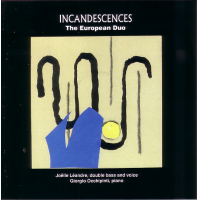
Que ceux qui cantonneraient la contrebassiste Jo�lle L�andre en figure de la 'free music' dans ses liens avec les musiques s�rielles, dod�caphoniques et atonales �coutent attentivement Part One ou Part Six, deux des sept �changes de ce disque avec le pianiste Giorgio Occhipinti. L�andre joue en 'walking bass' dans la tradition. Ce jazz-l�, dor�navant classique, c'est aussi �a culture, son v�cu. C'est ce qui lui permet de prendre des chemins de traverses, ailleurs, hors du tempo, dans l'exploration des timbres, des mati�res (Part Two), tout en r�inscrivant son jeu dans un travail m�lodique, lyrique, sinueux (Part Four). L�andre en duo, c'est toujours la g�n�rosit�, l'�coute de l'autre. Giorgio Occhipinti, la trentaine, Sicilien, rappelle le passage du romantisme du XIXe si�cle vers le d�pouillement du XXe. Son jeu r�actif, contrepoint rythmique permanent, constitue une proposition � aller de l'avant autant qu'� tirer profit de l'exp�rience de L�andre. La musique improvis�e n�cessite un rapport d'attention extr�me. Il est ici artistiquement fructueux et rejaillit sur chacune des pi�ces que les deux musiciens jouent en solo. *** “

Sylvain Siclier

“Jazz Hot” (France), February 2000

“The European Duo, c'est Jo�lle L�andre, bassiste fran�aise bien connue, pr�te � toutes les exp�riences, et Giorgio Occhipinti, jeune pianiste sicilien, auteur des th�mes du CD, lui aussi se frottant � ce qu'on appelle l'improvisation europ�enne avec une maestria peu commune. Il pc�de souvent par courtes phrases dans lesquelles passe un stride affolant et �poustouflant. Il joue aussi sur une pulsation induite avec un v�ritable travail orchestral � la main gauche. C'est lui qui fonda ce duo en 1995, c'est � dire que les deux musiciens sont en osmose totale. Il y a du blues parfois chez Jo�lle L�andre. Musique exub�rante de la d�construction, voire du chaos, qui sort du cadre traditionnel du jazz, mais qui n'en est pas moins belle et d�rangeante, c'est � dire qu'elle fait poser des questions. A vous de trouver lesquelles. Quant aux r�ponses, elles doivent �tre dans la musique. “ Serge Baudot

“Cuadernos De Jazz” (Spain), January/February 2000

“La tensi�n entre su piano solemne y el bajo espaciado y percusivo de L�andre tiene momentos de excepci�n en su parte cuarta. Su densidad merece estudio y dedicaci�n. “

A. G�mez Aparicio

“Cadence” (U.S.A.), May 2000

“Incandescences is a piano/bass duo that is at its best when it's on fire, and that's often on this disc. Occhipinti grabs attention immediately, playing with a sophistication, refined precision, and raw energy that recalls Stravinsky's little-known piano music. Indeed, he seems at times during these duets (and Part Three, his solo showcase) to be making explicit reference to Stravinsky pieces like 'Sonata', 'Piano Rag Music', 'Tango' and 'Circus Polka'. Of course, he doesn't play the inside of the piano on Part Eight (accompanied by L�andre's intriguing vocalese) only to demonstrate that he has encompassed more contemporary developments - that's clear from his playing throughout. Listening to Occhipinti is like flying in a 747 with a stunt pilot at the helm: who would have known that this big lumbering beast could turn on a dime? Yet Occhipinti hammers away, making an immense sound, and then suddenly sweeps into an elegant whisper and back again, leaving one breathless and dazzled. L�andre, meanwhile, is a perfect match for him, for her energy, agility, and versatility are deservedly legendary, and are abundantly illustrated here. She displays a great range of percussive effects - perhaps in response to the power of Occhipinti's playing - but her bowing is the real treat here, wonderfully accenting the depth of Occhipinti's lines even at their most declamatory. Recommended. “

Robert Spencer

“Jazzrytmit” (Finland), 14.10.1999

“Kontrabassolle l�ytyy sek� klassisessa ett� jazzmusiikissa hyvin v�h�n aivan esill� olemisen mahdollisuuksia. Sille on kirjoitettu hyvin v�h�n sooloteoksia. Itse asiassa ovat suomalaiset osaltaan paljonkin parantaneet telannetta. Teppo Hauta-ahon s�vellykset ovat suosittuja esitys- ja koesoittokappaleita. Rautavaara on jopa s�velt�nyt kontrabassokonserton nimenomaan Esko Lainetta varten. Basisti, h�nest� kerrottuine hyv�ntantoisine piloineenkin, luokotellaan rumpalin kanssa muusikon luotettaviin taustatukijoukkoihin. Nuori sisialinen pianisti Occhipinti ja h�nt� ilmeisesti hiukan vanhempi basistitytt� (-rouva?) L�andre (belgialainen? ranskalainen?) ovat korvanneet er��n puutteen ja tuottaneet Belgiassa liven� ilmesesti t�ysin improvisoidun kontrabasso- pianoduolevyn, joka minusta etsii vertaistaan. Kontrabasso on vastoin yleist� luuloa hyvinkin monipuolinen laatikko. Sill� voi soittaa jopa moni��nisi� kaunita melodioita, normaali- tai huilu��nin�, sit� voi kihnuttaa, raapia ja paukutella, sit� voi n�pl�t�, sormeilla ja hipel�id�, sill� voi kompata melodiasoittoa sek� tiepysti viel� liitt�� ��ntelyn mukaan. Sill� voi l�yt�� muitakin ��ni� kuin vakiintuneessa klaviatuurissa on tarjolla. (nauhallisen basson rajoitukset!) T�t� kaikkea Jo�lle todella tekee, hurmioituneena, tunteellisena, raivolla, rytmisesti kiehuvasti ja levolle laskeutuvasti. T�ss� menossa ovat nyt basistivitsit v�hiss�! Eih�n t�m� kai jazzia ole? Tai toisaalta, Bachin ja Mozartinkin pit�� scvengata, joten nekin ovat ehk� jazzia? T�m�n duon ��nituotos on hauskaa, svengaavaa, mielkuvitusta kiihottavaa, musikaalisesti soittopartneria peilaten kommunikoivaa, eik� taatusti pitk�veteist�. Synergiassa vilahtelee Stravinskia, Vivaldia, ragtimea, Cecil Tayloria, Ir�ne Schweizeria. Kyll� siell� jazziakin l�ytyy, varsinkin Jo�lin ��ntelyosuuksissa. T�m� ei ole mit��n Kiri Te Kanawaa! Levy osoittaa, ettei hauskan ja samalla vakavan modernin muslikin vapaudan savuttamiseen tarvita torvia, jousista puhumattakaan. Suositellaan, ei kun tyrkytet��n kaikille kaikenlaisesta musiikista kiinnostuneille. Ja muillekin. Varauksetta.” Heikki Tegelman

“Hurly Burly” (Spain), 11/2000

“A CD recorded in 1997 that brings us a product in which the dialogues between instruments go through very different states and situations. On a different level, monologues are reserved as spaces intended for a clear and specific displaying of each musician chich, in the case of Occhipinti, comprises narratives which include memories of and fond feelings for Stravinsky, Ravel, Taylor or Ir�ne Schweitzer.”

Francis Monroe

“Het Nieuwsblad” (Belgium), 25.09.1999

“De Siciliaanse pianist Giorgio Occhipinti en de Franse contrabassiste Jo�lle L�andre vormen sinds 1995 een opmerkelijk duo. Los van alle stijlvormen en conventies, maakt dit duo ge�mproviseerde muziek, die thuis hoort in de Europese avant-garde. Occhipinti betoont verwantschap met de Zwitserse pianiste Ir�ne Schweizer en kan met enige moeite ook aan Cecil Taylor gelinkt worden. De wat oudere L�andre heeft al heel wat ervaring, maar is hier vooral bekend van duo-prestaties met Ir�ne Schweizer. Zij is hier in de meeste gevallen de “spelbepalende” figuur, die in Giorgio Occhipinti een leuke, creatieve partner gevonden heeft. Alle mogelijkheden van hun instrument worden ten volle benut. Beiden houden van een vrij percussieve aanpak, vaak met inzet van lijf en leden. Maar ook andere middelen tot expressie worden niet ongemoeid gelaten. De stem van Jo�lle L�andre speelt soms een wezenlijke rol in deze muziek. Het is voor minder geoefende oren wellicht wat wennen, maar deze muziek is levendig en boeiend door de spontane expressiviteit en de vitale en humoristische trekjes.”

Luc De Baets

'Juul's halo' (Belgium), November/December 1999

“In 1995 liepen de Franse bassiste Jo�lle L�andre en de Siciliaanse pianovirtuoos Giorgio Occhipinti van stapel met het European Duo, een ambitieuze naam, maar verdiend. In mei '97 namen zij in het kasteel van Wijnendale te Torhout de cd 'Incandescences' op: een suite van negen delen, door beiden gecomponeerd. Jo�lle L�andre (�1951) behaalde een eerste prijs aan het conservatorium, en speelde samen met de belangrijkste Europese free musici als Derek Bailey, Evan Parker en Annick Nozati, en de Amerikanen Barre Phillips, George Lewis en Butch Morris. In de States trad ze aan met John Cage (1981) en Anthony Braxton (1983). Ook triomfeerde zij in '93 op het festival van Mulhouse met 'Les Trois Dames' (plus Annick Nozati en Ir�ne Schweizer). Giorgio Occhipinti (�1969) vormde met Guarrella in '89 het 'December Thirty Jazz Trio' en stichtte vier jaar geleden het 'Hereo Nonetto', dat leidde tot 'The Kaos Legend'. In de onderhavige spontane sessie bereiken zij werkelijk pieken van ge�mproviseerde muziek. L�andre beschikt over een enorme technische virtuositeit, precisie, kracht en zin voor humor, zowel arco als pizzicato. Onvoorstelbaar hoe ze hier haar instrument expoilteert, martelt en vleit, lyriek en explosiviteit, vol onmogelijke technische effecten. Zij dubbelt bij momenten met haar stem, kreten en vocalisen, lijnen zelfs. Occhipinti is een uitstekend pianist, die zowel naar de jazztraditie en zijn grote voorlopers (Cecil Taylor), als naar de 20e-eeuwse 'klassieke' componisten luisterde. Hij drukt zich nu eens pensatief, dan weer in continue eruptieve frasen uit, steeds helder van aanslag en pianistiek hoogstaand. De verstandhouding tussen beiden is voorbeeldig. De cd wordt dan ook warm aanbevolen aan alle free freaks!” Juul Anthonissen

'Knack Agenda' (Belgium), October 1999

“The European Duo noemen Jo�lle L�andre (bas, stem) en Giorgio Occhipinti (piano) zich. Ze laten zich inspireren door uitgeschreven passages, patronen en bouwen de stukken vaak gelijkmatig op. Er zijn echo's van klassieke muziek, repetitieve passages, stille momenten en helse uitbarstingen. Dit duoformaat is een goede manier om dit soort muziek te beluisteren, het is live (een concert in Torhout) en de communicatie tussen de twee is duidelijk gerodeerd. Deze muziek kan ook op plaat gesavoureerd worden.”

Gerry De Mol

'Cadence', 01/2001 “L�andre's strings sing and Occhipinti's keys sparkle on their very engrossing duet on 'Incandescences'. The two have been playing as the European Duo since 1995, and the empathy in their jointure is immediately evident. This concert was made in a Belgium castle, and the vibes must have been perfect for the two on that night. L�andre is able to coax a fat sound from her bass in the pizzicato mode. The notes seem to leap from her instrument in large gulps that bounce around the room. Her passion for the more frequently used arco style provides just as much stimulation. Whether she is bowing in the lowest register or eking out high-pitched squeaks, she produces music that is stimulating and inovative. Occhipinti is a free and open pianist, yet his improvisations have a thread of substance that knit his explorations together into a tangible mass. He is all over the keys in a mad dash of exitement that has a logical progression to it. There is nothing random in his playing. His improvising fits together the way a puzzle unfolds in its solving. As individualistic as the two artists are, their combined playing produces magical moments. Their efforts emerge as a unit, with neither seeming to be a leader or a follower. They both anticipate the desired direction and steer the compatible course that allows them to move as one through the intricate maze of freely improvised passages. When L�andre gets excited during particularly energized segments, she slips into her noted voice-over-bass mode with non-word self accompaniment. Although the technique is used very sparingly, it has a tendency to break the hypnotic spell that she so carefully conjured up to that point. The two quickly recast the mood with interactive playing to allow one to slip back easily into their mesmerizing world. L�andre and Occhipinti have perfected the art of the duet, and together they spin a fascinating web of intriguing music.”

Frank Rubolino

'Coda Magazine' (Canada, January/February 2001)

�It should come as no surprise that Jo�lle L�andre and Giorgio Occhipinti have scant use for the tradition of piano and bass duets. L�andre throatily sings a tad here, rumbles thunderously there, and Occhipinti roils and plinks and splays the notes all over the place. What they come up with is a nervy, captivating highwire walk filled with thick lows and highs that verge on being incisive. Their nine-part 50-minute excursion is beautiful in the way Francis Bacon's paintings were, which is to say they draw you in only to amaze you and trigger reflections on being drawn in.” Andrew Bartlett

“The Wire” (UK)

“At 50, Jo�lle L�andre is one of the towering musicians of her generation. Ryoji Hojito, a longterm collaborator with Otomo Yoshihide, is a remarkably tactile pianist whose precise touch on the keyboard and measured delving into the intenor are as communicative as the notes he plays. The vastly experienced bassist clearly recognises something special in this meeting and is determinated to mark the occasion with emphatic playing, especially with the bow. A shared soundworld is established immediately; Intimate yet rigorous investigations follow, with room for laughter. In his sleevenotes for 'Incandescences' Bertrand Serra says, 'These two musicians are too alike to simply mirror one another', it's a neat paradox and perfectly apt: L�andre and Occhipinti have been working as The European Duo since 1995. The pianist from Sicily, is rising in stature (this live recording dates from 1997). His style is restless, showering sparks, flurries and allusions. It's often disjunctive, skipping ingical connections and making bold leaps across the keyboard's expanse. He matches the bass virtuoso in the confidence of his soloing. L�andre is recorded less graphically close here, but assured improvising and lightning responsiveness justify the album's title. “ Julian Cowley (July 2001)

“It is said that time and tide wait for no man. Time, however, has waited for this piano trio. The group's first recording, The Street One Year After, was released in 1991. Since then they have released two more, both in the last decade. As for the tide, it still roars in their favor. The brand new music on Free For 3 feels electrifying, emerging from the heartland of musicians who have an apparent affinity with each other. It is no secret that despite the sporadic trips to the studio, they have been playing concerts together. This, perhaps more than anything else, continues to make them a cohesive force. Freedom is the essence of its expression, but in seeking it the trio does not always desert melody. These players build and expand and often mould an inventive concept out of disparate strands. Pianist Giorgio Occhipinti leads the charge on the first tune, building his story through a scurrying welter of notes that gather momentum, and then, as bass and drums stir the action, explode in euphoric frenzy. The last notes come from Giuseppe Guarrella's bowed bass, which turns out to be the harbinger for “Before the New Street,” where his opening phrases are short and thick. As he goes into a more detailed statement opening the tonality of the bass, drummer Francesco Branciamore tackles time with offbeat phrases and Occhipinti slowly but surely ups the tempo. The third segment is for Branciamore, his accents on the cymbals and snares and his trapping testifying to an unique aesthetic. And then it is melody time, pronounced in a blistering, but nonetheless straightahead manner. Ochhipinti finds himself in exceptional form on the solo “Novelle Siciliana Per Piano Forte Solo In Forma De Ballata,” his right hand a messenger for delectable melodic resolutions, his left stabbing chords with a deft authority. The third suite is stunning in its intensity without being overwhelming. Once again the clean lines bridge the evolution of the music and make it compelling, as on “Hommage,” where the bent notes and orchestration that Guarrella evokes through arco lead to the calmer pianism of Occhipinti. The equation is altered on “Basic Music,” which emerges imaginatively through the interweaving of the soundscapes each constructs. This one was well worth the wait.” Jerry D'Souza in allaboutjazz.com

INTERWIEW TO THE “DANAS” (YUGOSLAVIA) DAILY PAPER

1. It is unusual for a young artist being classically trained for piano to get attached for a couple more instruments, like drums and flute, in your case. How did you fell playing three instruments, and how did this one-man ensemble directed your future career?

I have begun my approach to one musical instrument at five years, just with the drums of the City's Band. Immediately also I have begun to play the piano. After I have played also the flute. I always have been fascinated from music (in its total). To know several the musical instruments, for example, always has been my enormous interest. Like compositor, before writing music for the instruments, I want to perfectly know any instrument for which I compose. Nearly like playing them! My career of musician, of improviser and above all of composer has been strongly forged from this my interest towards many musical instruments. In some way, playing the drum, pianoforte and flute I have immediately had an approach directed with the three foundations of music: rhythm, harmony, melodia. I think that all this has been sure a solid base for all which I have constructed like composer and improviser, like musician. Today I play only the piano (this is my instrument) but it is remained in me a great interest for the other musical instruments; in this period, for example, I write much music for strings.

2. Can you tell me something about your father trumpeter and influence of this fact to your decision to get involved in music?

The infuence that has had my father in my decision to approach me the study of music has been fundamental, very very important. My father is a amateur trombettist; he play in the weddings, in the great cerimony and dance's evenings. The more important thing that he has given to me has been the enormous love for the music and for all which is creative art. We haven't shared the musical and artistic choices but we have shared Music, the Art. I don't love to think to the music like only a way to amuse themselves or to pass the pleasant hours but like an Art that helps to reflect, to think, nearly a therapy that uses the sounds to force the person who play or that listens to must make remarkable efforts, to must think, to enjoy the beauty of the sound and the force of the noise, or of the amalgam of the harmony; he must reflect on the structure of music, on the infuences of that musician (from where he comes, from where he arrives, which travels has made that musician to play that music). My father has given me all this, even if he play music to make dance the people, he play the Italian canzonette. But I am pleasing to my father because the way that I cover is a road that, unconsciously, he has indicated me.

3. You have been a member of and often you formed many attractive jazz formations, and the all won to be among the most important Italian bands of the kind. And the CDs, this bands have been recording for CDs of the year. What was, in your opinion, the secret of those ensembles of your from the 90'?

I think that the secret of all my groups, of my projects is my music, my way to write music, my way to create music and to make play my music, the approach that I have with the improvisation and in the same time the way in which I make to improvise my musicians. The main hinge of all my musical idea (that characterizes my groups and my CDs) is the composition, the structure! The composition is thought like construction with musical or graphical contemporary notation, or also like creative structure that uses the improvisation like means to construct the composition. In practical, in this last way, the composer creates the composition using to the maximum the creativity of the interpreter but he doesn't leave the interpreter free to compose: he uses the intepreter to construct the own composition. This second modality is also a “center point” of my laboratories and workshop of experimental music in which I try to transmit to the students this my idea of improvisation like not improvisation. In my last discographic work “REVOLUTION”, that will exit next May 2003 for the German label “Between The Lines” (recorded with my group GIORGIO OCCHIPINTI GLOBAL MUSIC NONETTO) and that I hope of being able to carry here in Yugoslavia the next year, I use these two ways that identify my music. I write in the cover of this new CD: “... This recording is like a voyage toward my intimate artistic integrity and toward revolutionary elaboration of music�Heterogeneus language and creative universe's emanations filtrated and enslaved into my exclusive code perpetually devoted to the screening of globality and circularity... This music can only be desired and loved; only in this way it will be able to be decoded. Otherwise it wouldn't be able to have its life. Art is devotion, consecration, love; a spiritual voyage toward own ideals. It is a inestimable projection and “subjectively objective” of a cretivity. Art and a global music are a universal language, that we, revolutionaries that imagine the essence of things, identify with vehemence and longing to know the thousand “overtoure” of the human control and creative and of the experimantation...” I think that these words are the synthesis of the reason for which my projects arrives straight to the center, to the heart of the artistic speech.

4. How would you describe your work with Olivia Bignardi in DUETSEQUENCES?

This project with Olivia was born from the crossing of two compositive ideas and from the encounter with this wonderful improviser and interpreter that play soprano and bass clarinets (and in other projects also alto sax). The first idea was born from the composition work that I have made writing seven sequences for Cellos Duet , four sequences for Strings Quartet, twelve mottetti for strings sextet and alto sax. From these works (someone published on Cd, others will be published in the next few years) born the structural idea that I have used in the Duetsequences. The second idea born in my laboratories of experimental music (the idea of “improvisation - not improvisation” about which I spoke before). The encounter with Olivia Bignardi (that I have known in Bologna at the festival TPO in which we have played in duet) has given input final to this my project. Olivia play also in my nonetto and an other group parallel to these DUETSEQUENCES that, using the same modalities of which I have already spoken, advance in the improvisation - composition nearer euroopean and contemporary jazz (if we want to use the tags). This group named “LESS OF FIVE” ,beyond me and Olivia, it has to inside Giuseppe Guarrella (great bass player) and Antonio Moncada. Also these two musicians make part of my nonetto (and Giuseppe play also with me in the “DECEMBER THIRTY JAZZ TRIO” historical group of the italian jazz).

5. The critics note main three the elements in your music: classical European avant-garde, Sicilian folklore and even Italian opera which is fascinating. Is it a good luck to be born on a ground that offers so many eminent influences (including the opera, which was born and developed in Italy, influencing all other national types of his genre in Europe)?

Infinity of persons tries to discover and to focalize hundred of ancestries in my music. Not there is a rewiews of my works in which a journalist or a critic don't send back to that musician or that composer, and same I cannot deny that to times me effort to search and to examine in depth the several sources that are to the sure origins of my artistic inspirations. The truth is that my music is the controlled preparation of a constant conflict of suggestions that reach from the outside and that, journeying me to the inside, changes in an other language. Be born in Sicily for me represents one enormous fortune! The Sicily, from always, has been the center of the Mediterranean, the crossing and the crash of cultures and my music represent all this totally. When I think to my music I don't watch that music I want to make , than music it is my music. I think only to the creative idea. All the things that come listened in my music are only the fruit of one immediacy, of a directed creative thought to the composition and the structure, to the musical shape. Sure within my music there are many coming from infuences from the birth place, from the earth where alive, from music and the art that encircles me (the Sicily , the Europe) and the opera is one of the things in which they are dipped to me totally, especially in my adolescence. All it magnetizes and it allows to create, if it is used in the just way and with the love that can be felt for that you have in your intimate even if it comes from external influences: the constant and imposing risen towards that creative and human equilibrium that allows to control our creative ideas that it live in every human being.

6. As an artist in whose music experts can notice strong Sicilian roots, helping this music to have echoes all over the Europe, but America and Africa as well, how do you feel about current world music trends.

What I see and feel today in music it is a continuous and perpetual commercialization, to render this art simple, easy, transforming it in a simple light music and rendering ridicule of its functions of search, experimentation, creativity. The young people, in special way, are attracted more and more from all that can be caught up easy and this provokes an impoverishment of all that is culture, of all that it demands engagement in finding other creative and artistic ways exploring all the possibilities with which an artist can express his art! My hope and that we will to change this tendency bringing back Music towards its true made artistic dimension of study and of search, made of engagement intellectual and also physicist. I think to the Music like a place where all the diversities, all the languages, all the people of the world can be expressed. The difference in music and the art is always connected to the culture of the earth in which it is lived and it is born, to the origin place. For this the heterogeneity between musics of the north and the south, east or west, don't exist! Really dissonances in every creative thought (in the crashs and in the comparison live the creativity) because the Art is tied to just the space of belongings but, at the same time, are a cosmopolita language: to process the own roots offering them to all, this is the great challenge. In my case, in my music, all the differences cooperate to the creation of a single language. Bewitches me the observation of “all which is not equal”: to use them is, for me, a work or, in order better to say, an enormous game of figuration that renders them homogenous. In bottom, festival or a review of music or Art would have, today, to realize just this enormous ideal. The living and vibrating theatre, than alive in all the artistic shapes. Also music is theatre: the theatre of the sounds of the world where the north and the south, the east and the west are various equal.

7. Give us a brief description of jazz you play today.

I haven't never understood what I play! I don't love the tags, the labels, and I don't think to what I am playing but I think only to the sounds, the noises, the shapes, the structures, the instruments that will play my music. I think to the musical speech, the possible variations and the new possibilities towards which I want that my music heads. I still don't know if what I play is called jazz or contemporary music and, still more, I don' know if the jazz or other musics has never existed . For me exist the Art that is taken advantage of various languages, between which the music. The music that I play is only a travel towards all that that I love and that it is within of me. I have only tried, till now, to show my spirit through the music. Therefore for me the music that I currently play is only the mirror of my spirit and my creativity that it comes from all that it has influenced me in the art and the life, from all that that I have studied, tried and experimented, nothing more.

Autenticno, malo intimno putovanje unutar jedne privatne i veoma licne Sicilije, koja se pri tom napunila jarkih odjeka muzike iz prakticno svih sfera evropske seriozne i popularne zvucne elokvencije, da se odmah zatim izlije napolje u kratkim rafalima i sevanjima izmedju klavira i klarineta - eto, tako vec nesto mogli ste poneti kao utisak sa ljupkog minijaturnog koncerta vehementnog italijanskog dua Djordjo Okipinti - Olivija Binjardi u izvrsno posecenom Klubu Doma omladine Beograda za ovako osobenu muzicku priliku. Na sceni koja uobicajeno pripada savremenim rok bendovima, Okipinti i Binjardijeva snalaze se dakako veoma dobro, prezentujuci ocigledno zaintersovanoj beogradskoj publici svoje ocaravajuce “Duetsequences”. Malocas pomenutu vehemenciju ovih dueta medjutim treba shvatiti sa vecom delikatnoscu od one koja se tradicionalno podrazumeva. Okej, Okipintijev klavir, zapravo pijanino, sa uklonjenom vertikalnom plocom, da bi on mogao i direktno da okida zice ili ih tretira svojom malom zbirkom pomagala u sklopu sviranja, jeste na momente zestok i naoko neobuzdan u tolikoj meri da moze da vam se ucini kako on i bukvalno poskakuje na sceni, kao u kakvoj najludjoj fantaziji o Dzeri Li Luisu na tonucem “Titaniku” u okviru brodskog orkestra. Olivija Binjardi, pak, eksponira se mnogo prigusenije, ali svejedno odlucno, sa opustenoscu prevejane dzez zverke sa milion sesna za sobom. No, cela stvar je mnogo fragilnija, mislim, i ne pripada niti jednom zanru do kraja, vec se migolji izmedju pravovernog akademizma u smislu svojske obucenosti za interpretaciju, te izmedju originalne verzije primenjenog dzeza, sa nesto malo folklora, efektno manifestovanog na bis, i mozda najvise eksperimentalnih tekovina umetnickog zvuka XX veka. Slusate li kako se ova svirka spontano odvija u svojim zamrsenim vokabularnim jezgrima, bez prestanka nadovezujuci svoje celine jednu na drugu, na pamet vam padaju najcudastveniji izrazi za opis takve pojave, poput “jazzpertuum mobile”, recimo. Sto i nije netacno, uopste ne. Naprotiv. Zorica Kojic

Free for 3 seems to have been conceived with a higher purpose since the suites were, in the main, put together to be performed at a series of Belgium jazz festivals. In contrast to some festival fodder, however, the three performers don't let the momentousness of the occasion mute their sense of humor. Case in point is the final number of the Mons Inspirations: “Novelle Siciliana Per Piano Forte Solo In Forma Di Ballata,” written by pianist Giorgio Occhipinti. Occhipinti, who has worked with genre jumpers like bassist Jo�lle L�andre and trumpeter Pino Minafra, knows about classical music by writing for his cello-heavy Octet. But he also knows how to burlesque the process. Sounding as if he's playing an unaccompanied clavichord, here he creates his own version of the popular 18th century, minor key instrumental piece that was supposed to be derived from a traditional Sicilian dance, then mixes it with 14th century Italian music. Coming out as if it was performed on a player piano, he repeats the head quicker and quicker, adding glissandos and bearing down on the keyboard. Recurring blues notes are mixed in to show that jazz-improv is involved, with the coda a series of quiet left handed sweeps. “To Janina Davidovic,” which precedes that number, is a tune alive with delicate impressionistic harmonies that seem to move from adagio to largo. As Occhipinti creates a sort of mid-tempo, multi-noted, quasi-ragtime, the syncopation speeds up to double and triple time. Meanwhile, the rhythm section creates the prototypical jazz beat, with drummer Francesco Branciamore -- who recently released an excellent CD with his Perfect Quartet -- delicately exercises his drums as if he was wiping them with a cloth, while bassist Giuseppe Guarrella generates a woody, fleet-fingered intro. Guarrella, whose playing partners have included saxists Mario Schiano and trombonist Paul Rutherford, also showcases his skills on “Before The New Street” in the first suite. Here, his string curvatures take on a classical tincture as tiny treble scratches are succeeded by sweeping arco notes from the bass bottom, relieved by the occasional strummed section that take on a rhythm of its own. Later as he replicates aviary-style chirps from his highest strings, Occhipinti sprays grace notes from the keyboard and Branciamore replicates wooden sounding clucks and clanks. By the final track, though, the percussionist has finessed a powerful climax, building up the tension with hearty swats on the crash cymbal and bass drum and exhibiting sounds that appear to be exploding from a cannon. Throughout, the pianist can go from a Morse code of extended single note pressure to swift insect-like arpeggios in a flash, the drummer can elasticize time with feather light brush work or extend it with accented cymbal splashes. All the while, the bassist come up with perfectly proportioned bass lines to fit each particular situation. Should more bands like this extending piano trio literature, it could end up lasting as many centuries as the Siciliana and the Ballata.” -- Ken Waxman in Jazzreview.com

Giorgio Occhipinti - Histoire 4/4+ O's Notes: Pianist Occhipinti takes a journey into his inner creative spirits. He complements his piano with strings, clarinets, bass and drums. The three lengthy compositions are based on his love for ancient music, world voyages and his interpretations of music. That may seem rather nebulous but the compositions come together nicely. It's like a marriage of older classical music form with contemporary jazz improvisation. We'll call it free fusion. -- D. Oscar Groomes

THIS IS A NEW CD OF GIORGIO OCCHIPINTI GLOBAL MUSIC NONETTO TITLED “HISTOIRE” (Between the Lines - October 2003)

If you are interested to invite this/theese group/groups, please contact : GIORGIO OCCHIPINTI Via Roma 32 97100 Ragusa (RG) Italia Fax 0039 0932 227175 email giorgioocchipinti@tin.it web http://gocchipinti.supereva.it

Last Updated: June 11, 2012

Please Sign Up or Log In to send your inquiry.

Sorry, no events found. Submit one now.

Your events will appear at the following locations: Jazz Near You, the weekly Jazz Near You email, the Jazz Near You app, the Jazz Near You calendar widget and this page.

CD/LP/Track Review

Post a formal announcement to the News Center. We'll publish it and syndicate it for you.
No videos available. Add a video now.

Showcase