Home » Jazz Musicians » Le Boeuf Brothers
Le Boeuf Brothers
Remy and Pascal Le Boeuf (saxophone and piano) are part of a growing New York jazz scene characterized by odd time signatures, alternative rock, and the influences of artists such as Radiohead, Brian Blade and Kurt Rosenwinkel. What makes the 23-year-old Le Boeuf Brothers sparkle among other young jazz musicians is their uncanny ability to communicate with each other using their own secret musical language. This isn't surprising when you discover that Pascal and Remy Le Boeuf are identical twins.
In their short musical career, the Le Boeuf Brothers (pronounced “le buff”) have garnered an impressive tally of national and international awards and accomplishments, the most notable being the ASCAP/IAJE Commission honoring Quincy Jones, which premiered at the 2004 IAJE conference and featured tenor saxophonist Chris Potter. The Le Boeuf Brothers have also received awards from Downbeat Magazine, the National Foundation for Advancement in the Arts, and dominated the 2006 Independent Music Awards, winning Best Jazz Album and Best Jazz Song for their prior release “Migration”. Most recently, the track “Code Word” on their new album “House Without A Door” received 1st place in the International Songwriting Competition.
Upon graduating from the Manhattan School of Music in 2007, Remy and Pascal made the difficult decision to separate for a year. Pascal explains, “we decided it would be best for the two of us to pursue our individual interests for a year and share our knowledge with each-other upon reuniting.” This gave Remy the opportunity to develop multiple projects incorporating 20th century classical composition, while allowing Pascal a chance to travel around the U.S. and Canada, writing and collaborating with various artists for a soon to be released rock/electronica album under the alias “iPascal”.
The Le Boeuf Brothers have since reunited to record their most recent album “House Without A Door.” Described by the New York Times as an “impressively self assured new album… which reaches for the gleaming cosmopolitanism of our present era.” “It showcases their evermore-confident composing. While half of the album features a tough, young rhythm section of their musical peers, the other half finds the twins keeping company with stellar New York cats like drummer Clarence Penn, trumpeter Ambrose Akinmusire and tenor saxophonist Marcus Strickland.” (Monterey County Weekly).
Pascal describes ‘House without a Door’ as “an attempt to create the perfect balance between intellect and emotion. After spending time apart working on contemporary classical composition and rock/electronica individually, it made sense for us to combine forces on this album.” These influences shine on tracks such as Remy's “Tabula Rasa,” a thru-composed maze of colorful saxophone arpeggio's resembling Claude Debussy and Miguel Zenon, and Pascal's “Wetaskiwin,” a dreamlike hymn clearly influenced by Radiohead. “Our hope is that by connecting with our own personal emotions through music, we can connect with our audience.”
Read moreTags
Le Boeuf Brothers: House Without A Door

by Mike Jacobs
The title track from the Le Boeuf Brothers' 2009 album House Without A Door leaves one to ponder how juxtaposed sonic waves of such sublime beauty, thrilling virtuosity and emotional tumult can issue from those so young. ...
read moreLe Boeuf Brothers + Jack Quartet: Imaginist
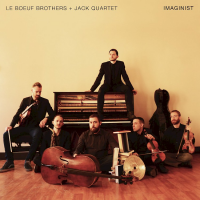
by Alberto Bazzurro
Non solo due, come l'intestazione lascerebbe intendere, ma addirittura tre sono gli elementi che vengono a intersecarsi in questo ambizioso album: il quintetto jazz dei gemelli Le Boeuf, trentenni di natali californiani (Santa Cruz) e successiva formazione newyorchese, il quartetto d'archi Jack e, nella suite “A Dream" che occupa il cuore (e una buona metà) del CD, la voce narrante di Paul Whitworth, a contatto con l'omonimo racconto di Franz Kafka (titolo originale tedesco “Ein Traum"). Detta ...
read moreLe Boeuf Brothers + JACK Quartet: Imaginist

by Mike Jacobs
If one were to reference the Le Boeuf Brothers previous recordings for what to expect from their latest effort with the JACK Quartet, Imaginist, they might indeed find a pattern of fine musicianship and compositional ability that would not mislead. But clear evidence would also be shown of the Le Boeuf's tendencies toward eclecticism and unpredictability. These clues would also not mislead but would be of little help, specifically. And if one were to look to some of the many ...
read moreTake Five With The Le Boeuf Brothers
by Pascal Le Boeuf
Meet Le Boeuf Brothers: Prepare to be astonished by the bold compositions and stylish approach of the Le Boeuf Brothers, jazz twins with an ear for innovation, drama, and a touch of humor. Part of a growing New York jazz scene characterized by odd time signatures, current indie rock, and the influences of artists such as Radiohead, Kurt Rosenwinkel and Herbie Hancock, Remy and Pascal Le Boeuf (saxophone and piano) play a sophisticated brand of modern jazz that, ...
read moreLe Boeuf Brothers: In Praise of Shadows
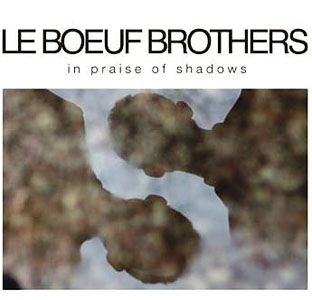
by Mark F. Turner
Projects such as the Le Boeuf Brothers' In Praise of Shadows should help quiet the debate on whether or not jazz is stagnating. The twins--keyboardist Pascal and saxophonist/clarinetist Remy--are talented musicians and award-winning composers who are a part of the new breed of young artists, like trumpeter Ambrose Akinmusire, pianist John Escreet and bassist Esperanza Spalding, who channel their influences, environments, and resources into works that reflect their own identities. As in their self-released 2009 debut, House ...
read moreThe Le Boeuf Brothers Release - Le Boeuf Brothers Remixed - Available: April 30 On Nineteen-Eight Records
Source:
Jason Byrne, Red Cat Publicity
Featuring new remixes by Remy & Pascal Le Boeuf, David Binney, Tim Lefebvre, “Wolff Parkinson White" (AKA: Jochen Rueckert), Kissy Girls, Lucky Luke & Armand Hirsch The Le Boeuf Brothers will be appearing at: Dizzy's Club Coca-Cola on April 3 and The 55 Bar on April 7! “This group has an impressively self-assured new album, “House Without a Door" which reaches for the gleaming cosmopolitanism of our present era." - The New York Times “A rich brand of modern jazz, ...
read more
Le Boeuf Brothers Expand Into The World Of Kafka
Source:
Remy Le Boeuf
For many of today’s jazz listeners, it is difficult to define the connection between the music and what it expresses—if anything definite is being expressed at all. What is the music about? There is certainly an abundance of beauty in abstract improvisation, yet no matter how abstract, every solo we hear and every song remains a story that takes us somewhere within our minds, our past, and becomes a part of the ever-growing narrative of our lives. Stories play an ...
read more
Primary Instrument
Various
Willing to teach
Advanced only
Credentials/Background
The Le Boeuf Brothers experience as an educators ranges from working for the National Foundation for Advancement in the Arts, to private lessons, to teaching on faculty at the Stanford Jazz Workshop. They frequently perform clinics and master classes at educational institutions.
Clinic/Workshop Information
Ensemble Interaction: So often in today's jazz education world students get into the habit of filling roles within the context of ensemble playing, and they often end up forgetting what possibilities are at their disposal
Photos
Music
Recordings: As Leader | As Sideperson
Videos
Similar

Kurt Rosenwinkel
guitar
Chris Potter
saxophone
Brian Blade
drums
Jonathan Kreisberg
guitar
Seamus Blake
saxophone, tenor
Mike Moreno
guitar
Ambrose Akinmusire
trumpet
Ari Hoenig
drums
Gordon Grdina
oud
Rudder
band / ensemble / orchestra
Marcus Strickland
clarinet, bass
Alexis Cuadrado
bass
Jarrett Cherner
piano
Manuel Valera
piano
Brian Groder
trumpet
JD Walter
vocals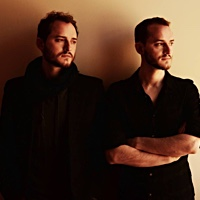
Le Boeuf Brothers
Instrument: Various
Born: August 3, 1986
Publicist: Fully Altered Media