Dave Fisher

follow
STATS Rank: 10,431 Views: 2,357

Upload photos of Dave Fisher.

Born: July 19, 1940 | Died: May 7, 2010    Primary Instrument: Guitar, acoustic

Dave Fisher

Dave was born in New Haven, Connecticut, on July 19, 1940, the son of Abe and Sadie Fisher. His special talent as a musician and singer first surfaced at Hillhouse High School where he was a member of “The Academics,” a popular doo-wop singing group that toured New England to great acclaim. Their hit “Something Cool,” with David singing lead, can still be heard on www.doowopjukebox.com as a song featured in June, 2006, and November 2008, and on YouTube.

Upon graduation from high school in 1958 he left The Academics behind and entered Wesleyan University in Middletown, Connecticut, where he continued his musical interests, graduating in 1962 with the University’s first degree in Ethnomusicology. In his freshman year, David was a founding member and lead singer of “The Highwaymen,” which became one of the most prominent and successful folk music groups of the 1960s.

While still at Wesleyan, United Artists released David’s arrangement of “Michael Row the Boat Ashore” as one of the Highwaymen’s first records. “Michael” soon became a hit, soaring to #1 on America’s best seller lists, where it remained for many weeks, earning for David and the group a Gold Record.

“Michael’s” success nationally was immediately repeated around the world, and it became the number one record in more than 20 countries. It soon became the top-selling folk song of all time and was responsible in 1961 for a spike in the name Michael being given to newborn children. Dave and The Highwaymen followed “Michael” with a double sided hit, “Cotton Fields” and “The Gypsy Rover,” landing them in short order on the Ed Sullivan and the Johnny Carson television shows and launching the group on a nationwide concert tour.

The Highwaymen continued to record and to perform after college, adding Gil Robbins to the group and making the Gaslight Café in Greenwich Village, New York, the center of their operations. There Dave met and interacted with such seminal folk music figures as Bob Dylan, Tom Paxton, Buffy St. Marie, Phil Ochs, Len Chandler, Carolyn Hester and many others.

“The original Highwaymen, along with the Kingston Trio and, later, Peter, Paul and Mary, were among those responsible for popularizing original American music, “call it folk, blues, country, whatever,” Kris Kristofferson told The Times on Wednesday. “Those of us who were able to walk through the doors they opened are grateful.”

He formed the Highwaymen in 1958 with other students at Wesleyan University in Middletown, Conn., during the height of the folk music renaissance that had been spurred by Woody Guthrie, the Weavers, the Kingston Trio and others.

It was there that Fisher met Bob Burnett, Steve Butts, Chan Daniels and Steve Trott, and started the Clansmen, a name they picked for the Irish and Scottish folk music influences they drew upon.

They were unaware of the racial connotation the name carried in the American South, and as soon as their music started to build a following in the Northeast, their manager came up with the name the Highwaymen, a nod to the early 20th century poem by Alfred Noyes.

It was a choice that led to a brief scuffle years later with the country music supergroup born when Johnny Cash, Waylon Jennings, Kristofferson and Willie Nelson decided to record and tour together under the same name.

After the original Highwaymen sued the country quartet in 1990, Jennings suggested that Fisher and his mates open for them on their tour stop in Los Angeles, extending them the recognition and exposure before a crowd of several thousand fans they wouldn't have otherwise had access to.

Trott, who ultimately became a judge for the U.S. 9th Circuit Court of Appeals, praised Jennings' solution. “With a single swipe, he eliminated all the usual things that go with the resolution of this kind of thing,” Trott told The Times at that time. “Maybe we should turn the legal system of the U.S. over to Waylon.”

The Highwaymen's melancholy 1959 recording of “Michael,” abbreviating the original title for their version, was released as the B side of a single, and only became a hit two years after it had been issued, well after the group had been dropped by United Artists Records because its music had failed to connect in a big way like that of the Kingston Trio.

Disc jockeys, however, belatedly homed in on “Michael” and began playing it in 1961. It eventually went to No. 1 nationally, and spent two weeks atop Billboard's Hot 100 chart.

The Highwaymen's only other release to make the Top 20 was “Cotton Fields,” at the time a nearly forgotten song by folk-blues musician Leadbelly. Because of the Highwaymen's version, the song worked its way into the folk- rock lexicon and later was treated to versions by Creedence Clearwater Revival and the Beach Boys, among others.

The Highwaymen recorded eight albums before disbanding in 1964 amid the British Invasion. The various members of the group finished their undergraduate degrees and went on to nonmusical careers.

David continued in music in New York, working with Bert Knapp, the legendary vocal coach, and producing and directing a folk trio that used the Highwaymen name. Later in the decade he moved to Los Angeles, where he became a successful songwriter, arranger, and producer for movies and television, working among others with Don Costa and for 20th Century Fox Studios and Glen Larson Productions.

He contributed songs and arrangements for television shows including “The Fall Guy,” “Glory Years,” “Pensacola,” “The Incredible Hulk,” “American Soundtrack: This Land Is Your Land” and, fittingly, “The Highwayman,” and was the “go-to guy” in Hollywood for “source” music, which was used to support and enhance the mood in important scenes of the story. During this time, he and his friend and business associate, Wayne Hagstrom, known professionally as A.B. Clyde, wrote songs prolifically in many genres.

In their second life the Highwaymen issued five more CDs. Blitz, the rock 'n' roll magazine, called their album “When the Village Was Green” one of the best releases of 2007. The magazine recently honored The Cambridge Tapes, a recording of a Highwaymen concert at the Massachusetts Institute of Technology in 1963, as the best reissue or compilation of 2009.

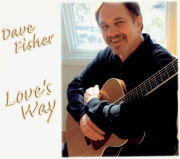
The Highwaymen reunited periodically over the years for occasional performances, and recorded several more albums after a national tour in 1987. Fisher's only solo album, “Love's Way,” came out in 2002.

Last Updated: May 13, 2010

Love's Way
Dave Fisher
2002


The Best of The Highwaymen
The Highwaymen
(Capitol)
1992


In Concert
The Highwaymen
2002


The Water of Life
The Highwaymen
(Varese Sarabande)
2005


When the Village Was Green
The Highwaymen
2007

The Folks Hits Collection
The Highwaymen
(Varese Sarabande)
2007


The Cambridge Tapes
The Highwaymen
(Folk Era Records)
2009

Disclaimer: All About Jazz is not responsible for the accuracy of the discographical data at the website(s) provided. If a link is no longer valid, please contact discography@allaboutjazz.com. Thank you.

Submit Take Five Answers. We'll publish your Take Five questions and answers as an article, feature it on the home page and link to it from your musician profile.
No videos available. Add a video now.
Featured recording “Love's Way”
Love's Way (2002)

Showcase