Home » Jazz Musicians » Claudius Valk
Claudius Valk
C-born 1966 in Ratingen/Germany
-Jazz and classik saxophone studies at Musikhochschule Köln (with Hugo Read and Wolfgang Engstfeld ) -jazz-studies at Folkwangmusikhochschule Essen (with Matthias Nadolny )
-1994 Folkwang award für Musik
Tours in many different ensembles and bands, mainly contemporary music and jazz in Germany, Benelux, Usa, Mexiko, Central und Southamerica, Japon, Skandinavia, Greatbrittain, East and South Europe, China, Cuba.... -Concerts on festivals in Tokio, Viersen, Leverkusen, Granada, Bergen, Budapest, Zürich, Brüssel, Berlin, Mailand, Madrid, Ljubljana, Eindhoven, Wien, Moers, Montreux etc.
-1994-99 Member of the belgium saxophone quartet ”Blindmann“ the ensemle is cultural embassador of Belgium
-Since 1994 ”Valktrio“ 1995 cd production of ”what else could I do“ featuring Joachim Kühn. Concerts im Trio wie auch im Quartett mit Kühn. Rundfunk und Fernsehproduktionen.
-1996-97 eight month trip to New York. Studies with Richie Beirch, Dave Liebman.Concerts with Chuck Clark, Ron Vincent, Lauren Stillman a.o.
-1997 three month concert tour to Cuba. Collaboration with Ramón Valle, Felipe Cabrera (Gonzalo Rubalkaba-trio). Gigs radio and TV productions
-since 1998 Concerts, productions, recordings etc with Jürgen Friedrich Quartet, Kölner Saxophon Mafia, Andre Nendza Quartet, Valktrio, LCE, Klaus Kugel,Leon Delray, Stefan Rademacher, New Bone, Barbara Dennerlein, Patrick Riguelle, Arek Skolik, Klaus Stötter, Norbert Scholly, Eric Vloeimans, Jasper vant Hof, Frank Gratkowsky, Xaver Fischer, Heiri Känzig, Reiner Winterschladen, Michel Massot, Claudio Puntin, Ack van Rooyen, Bob Meyer, CCJO, Klaus König, Joachim Kühn, Kenny Wheeler, Francoise Deppe, Achim Kaufmann, Udo Schild, Roland Peil, Alex Vesper, Jürgen Friedrich, Musikfabrik NRW, Werner Neumann, Klaus König Orchestra + Heartproject, Dave Liebman, and many more. . .
-since 2001 teacher for Jazz-Saxophon at Musikhochschule Köln -since 2001 teacher for Jazz-Saxophon at Conservatorium Maastricht
Awards
Folkwangpreis 1994
Gear
AMT Applied Microphone Technology
Tags
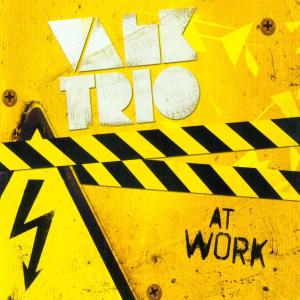
Valk, as, ts, b cl; Martin Gjakonovski, b; Roland Höppner, d. 7/07, Cologne, Germany. Though Cologne-based saxophonist Claudius Valk has had experience with numerous groups throughout his career, his Valk trio most effectively demonstrates his tightrope-walking improvisational skills. They capture listeners’ total attention with nearly off-balanced daredevilry that always rights itself, usually the closer it comes to the edge of its daring challenges. Without a chorded instrument or another horn to allow for harmonic support or elaboration of another’s ideas, Valk stands alone, presenting his melodies and stirring responses over the percussiveness of Martin Gjakonovski’s bass and Roland Höppner’s drums
Primary Instrument
Saxophone, tenor
Willing to teach
Advanced only
Credentials/Background
Hochschule für Musik und Tanz Köln /De Conservatorium Maastricht / NL
Clinic/Workshop Information
Sax Technique, Improvisation, Composition, Bandcoaching
Photos
Music


Think Before You Talk...
From: Pretend It's A CityBy Claudius Valk
Shapes for Ornette
From: At WorkBy Claudius Valk
Videos

Claudius Valk
Instrument: Saxophone, tenor
Born: October 20, 1966



