Home » Jazz Musicians » Rayna Gellert
Rayna Gellert
Rayna Gellert plays her great-grandfather’s fiddle—the same one he was playing in 1917 when, as a Hungarian orchestral musician aboard an ocean liner, he wowed the U.S. Ambassador with a rendition of “The Star-Spangled Banner” and earned an invitation to America.
Rayna’s father played that fiddle too. The honest inheritor of his family’s musical legacy, Dan Gellert took a job as a meter reader, immersed himself in the old, weird music of America, and became the greatest fiddler you’ve never heard of.
Then it was Rayna’s turn. She picked up the instrument when she was 10, recorded her first album of fiddle tunes at 24, joined the celebrated string band Uncle Earl, and played her great-grandfather’s fiddle on recordings she made with John Paul Jones, Robyn Hitchcock, and Loudon Wainwright III.
With all the weight of history attached to that fiddle, it’s no wonder Rayna needed to lay it down to find her own voice.
“I was raised in a household where traditional music was an obsession. I fell into being a full-time musician because I was obsessed too,” she says. “But while I was out touring I realized that it is my job to play music I love, which is bigger than protecting any one concept of tradition. I realized I was an artist, and I wanted to claim that.”
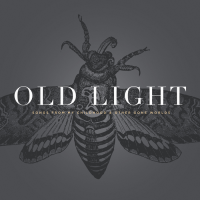
She makes that claim with authority on Old Light: Songs from my Childhood & Other Gone Worlds, an album showcasing her startlingly original talent as a songwriter and vocalist. A blend of new songs and fresh arrangements of traditional tunes, Old Light shows that deep immersion in our musical past can point the way toward the future of American music.
In the album’s soundscape, you can hear echoes of Rayna’s musical collaborations. The lush sonic palette reflects her experience touring and recording with Abigail Washburn. The straightforward treatment of those same songs points to the influence of Rayna’s recent collaborator, Scott Miller.
Washburn and Miller are featured on Old Light, as are other friends Rayna has made over a lifetime in music: Andrew Heller of Toubab Krewe; Nashvillians Jamie Dick, Jon Estes, and Kai Welch; and traditional music masters, including her father Dan Gellert and the esteemed vocalist Alice Gerrard.
Nathan Salsburg, a fiercely inventive finger-style guitarist, shares most of the arranging credits, and lends stirring musicality to the album.
Rayna is releasing Old Light on Dick Connette’s StorySound Records, where she joins a lineup that includes Loudon Wainwright III, Gabriel Kahane, and Rachelle Garniez. Rayna met Connette 14 years ago through a mutual friend, the musician, filmmaker, and photographer John Cohen, who did so much to document the traditional music of America.
Read moreTags
Uncle Earl Alum Rayna Gellert To Release Solo Debut Album October 2

Source:
1888 Media
In-Demand Collaborator To John Paul Jones, Robyn Hitchcock and Abigail Washburn Steps To The Forefront With Old Light: Songs From My Childhood & Other Gone Worlds Fall Tour Dates With Abigail Washburn And Scott Miller Asheville, NC: Acclaimed singer-songwriter Rayna Gellert is set to release her solo debut album Old Light: Songs From My Childhood & Other Gone Worlds on October 2, 2012 via New York-based StorySound Records. A mix of original compositions and fresh arrangements of traditional fare, the ...
read more
"I love Rayna's musical personality, which is deep, funky, and complex." Bela
Fleck
“Rayna is one of the most empathic musicians I've played with.” Robyn Hitchcock
Photos
Music
Recordings: As Leader | As Sideperson
Videos
Rayna Gellert
Instrument: Violin
Born: December 15, 1975
Publicist: 1888 Media



