Home » Jazz Musicians » Nick Waterhouse
Nick Waterhouse
Everything about Nick Waterhouse started with a single 45. Actually, if you’re reading this, you understand that just about EVERYTHING started with a single 45, and you understand that I’m writing this and you’re reading this because we once heard a certain kind of song on a certain kind of record made by a certain kind of person—some genius and some lunatic, some lucky and some cursed and so many who only existed for a few minutes with a microphone before them in some hacked-together shack. Those were places that would have more comfortably held a speakeasy or a bloodthirsty game of poker, but which were instead reborn as recording studios. (But you could still gamble—in a new way—and drink just the same.) At that kind of place, if you could do it, you did it, and maybe you made it or maybe you just made something to prove you were there. We’re still sorting through the wreckage even now. There are those kinds of 45s waiting to see daylight again in closets, barns and unpaid storage units across the belly of America, and sometimes you’ll find one with the original owner’s name markered across the label—a good sign, I’ve always felt, because that means they wanted that record to belong to them forever.
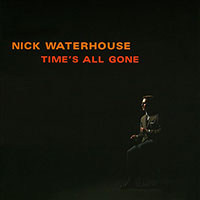
So here we are with Nick Waterhouse, who signs his own name across a righteous and exhilarating part of American music with this debut LP, snapped together from sessions traded for rent money and desperate favors and succeeding through strange luck, particular personality and a vision that would not crack. When he made that first 45 by himself, he was hoping less to launch a musical career than to bury the possibility with dignity. In his suburban hometown, there’d never been music like this, and when he moved to the big city for school, no one could be bothered to care about music like this. (Except record-store owner Dick Vivian, whose 45s were sustenance and medicine, and who’d later lend a lyric to this album.) So he recorded his song simply to prove that he could record his song, and if anyone later ever wondered who Nick Waterhouse was and what happened to him? Well—I mean,‘Welllllllllllllllllll …!’—then they could just listen:
“There’s some place that I’d rather be / it’s something been on my mind almost constantly / some place I don’t expect you to understand / people talk to me and I know they don’t comprehend / … / there’s someplace, I swear it’s not in my mind / but it’s somewhere I been trying so hard to find / some place, I know it’s not quite clear / a place I can only say that it’s not right here …”
Read moreTags
Nick Waterhouse: In The Nick of Time
by John Coltelli
A young rocker out and about in Los Angeles at 10 am may be an odd sighting, akin perhaps to seeing a polar bear in the sweaty Congo, but nevertheless here is 25 year old Nick Waterhouse, approaching a downtown diner on a sunny weekday morning to discuss his new album, Time's All Gone (Innovative Leisure, 2012). Looking as though he's just jumped from the pages of GQ (specifically the June 2012 issue), with a crisp new short-sleeved shirt tucked ...
read morePhotos
Music
Recordings: As Leader | As Sideperson