Home » Jazz Musicians » Lester Bowie
Lester Bowie
Lester Bowie was one of the most adventurous and proficient manipulators of the trumpet, having made use of everything from strict melodic lines to abstracted explosions of sound. He became a member of the newly- established Association for the Advancement of Creative Musicians, and it was through this he met the musicians with whom he went on to form the radical Art Ensemble of Chicago.
Lester Bowie was born in Frederick, Maryland in 1941, but he was raised in St. Louis, Missouri. His trumpet- playing dad was a high school band director who owned a master's degree, then, not an easy feat for a black man. By age five Lester was taking lessons from a proud father and by 14 he was under the wing of St. Louis trumpeter, Bobby Danzie, who was instrumental in tuning the young Bowie's jazz ears. A year later he was broadcasting and directing his own band. Later he joined the Air Force at 17, and played in ‘after hours’ R&B clubs in Texas.
It was while in the service that Lester began to incorporate elements of his early idol, Louis Armstrong, into his own style of playing. By the time his stint with Uncle Sam's regulars ended, those ears had absorbed Kenny Dorham and Freddie Hubbard , as well. An across-the-river (East St. Louis, Illinois) local kid had further tickled Lester's lobes as Miles Davis ' smoothness crept into Lester's playing.
If you're getting the idea that Lester Bowie is a hybrid, with roots and branches of varying hues, well, you're getting the right idea. But His eclecticism does not stop there. He went on the road with Blues, R&B, circus bands and carnival tent shows, settling back in St. Louis to form a hard-bop group with drummer Phillip Wilson, which included John Chapman on piano. His association with the likes of Oliver Lake, Julius Hemphill, and Floyd LaFlore, led to the formation of the Black Artist Guild (BAG).
Lester landed in Chicago in 1965 with his entire band in his horn and embarked on the obvious next exploration, the so-called "free-jazz" movement. He joined the Association for the Advancement of Creative Musicians (AACM) the following year. As he walked into the room for his first meeting, he was startled to see a passel of musicians the world was not yet ready to take to its bosom: Malachi Favors, Kalaparush Maurice McIntyre, Roscoe Mitchell, and many others. From that not quite chance meeting sprang the Art Ensemble of Chicago, among the most influential and creative groups in modern music: Lester Bowie, (trumpet) Roscoe Mitchell, Joseph Jarman, (woodwinds) Malachi Favors Maghostut, (bass) and eventually, Famoudou Don Moye (percussion).
Read moreTags
Archie Shepp: Blase And Yasmina Revisited

by Chris May
The three albums tenor saxophonist Archie Shepp recorded in Paris for BYG Records during one week in August 1969 tend to get overlooked in the slipstream of the dozen or so he made in the US for Impulse earlier in the decade. More is the pity, for as Blasé And Yasmina Revisited so resoundingly attests, the BYGs contain some of the most audacious, many splendored and deep roots music that Shepp has recorded in his still-kicking career (at the time ...
read moreRemembering Lester Bowie

by Lazaro Vega
From the 1995-2003 archive: This article first appeared at All About Jazz in December 1999. Lester Bowie played several concerts and made one so far un-issued recording in the late 1990's with Kahil El'Zabar's Ritual Trio plus poetess Ntozake Shange. The evening of grooves, improvisation and poetry came to Grand Rapids, Michigan, in September 1998 and played the Urban Institute For Contemporary Arts. 200 attended. The artists drew upwards of 500 in jny: Chicago and jny: Philadelphia ...
read moreLester Bowie Brass Fantasy: When the Spirit Returns
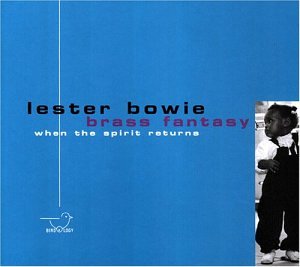
by Dan McClenaghan
Lester Bowie led the pack of avant-garde trumpeters in his work with the Art Ensemble of Chicago, but his Brass Fantasy output was always in a more traditional vein, even when blending elements of funk, hip-hop, soul, rock, reggae, and any other musical influences that crossed the bandleader's mind.Bowie passsed away in 1999, but two years earlier he took his Brass Fantasy into the studio and laid down two hours worth of music. When the Spirit Returns is ...
read moreLester Bowie: American Gumbo
by Jim Santella
This two-disc package from 32 Jazz includes two fine albums from Muse Records: Fast Last! and Rope-A-Dope, which were recorded in 1974 and ’75 respectively. Both albums reflect the style of an emerging leader, a founding member of the AACM & Art Ensemble of Chicago, and a champion of the jazz avant-garde. Specific elements such as fingers running across the piano’s inside strings, scratchy bowed bass melodies, horn squeals and random squawks reflect the changes brought about in the name ...
read moreLester Bowie's Brass Fantasy: The Odyssey Of Funk & Popular Music, Vol. 1
by Jim Santella
The easy-going tuba saunter and its accompanying trumpet line make Lester Bowie’s Brass Fantasy unmistakably easy to spot. Easy to love, too. The leader’s unique vocalized trumpet antics provide comedy relief; however, Bowie’s emphasis remains on entertaining his audience through a variety of options. The Odyssey Of Funk & Popular Music, Vol. 1 incorporates R&B, doo-wop, opera, fluffy pop, punk rock, showy balladry, and rap in a jazz setting. The message, however, is simply that music is universal and speaks ...
read moreRemembering Lester Bowie
Source:
St. Louis Jazz Notes by Dean Minderman
Today, we remember the great St. Louis trumpeter Lester Bowie, who was born October 11, 1941. Though Bowie actually was born in Maryland, he grew up in St. Louis as part of a family that included two brothers who also became professional musicians: Joseph Bowie, a trombonist and leader of the funk-jazz band Defunkt; and Byron Bowie, a saxophonist and arranger/composer. After developing his trumpet chops playing blues gigs around St. Louis with singers including Albert King and Little Milton ...
read more
STLJN Audio Archive: Charles "Bobo" Shaw and Lester Bowie - Bugle Boy Bop
Source:
St. Louis Jazz Notes by Dean Minderman
For this installment of the StLJN Audio Archive, we tune into Bugle Boy Bop, an album of duos recorded by drummer Charles “Bobo" Shaw and trumpeter Lester Bowie issued on the Muse label in 1983. The original LP (pictured) was recorded live at saxophonist Sam Rivers' NYC loft venue Studio Rivbea on February 5, 1977, with famed producer Michael Cuscuna overseeing the eventual release. Although Bugle Boy Bop never has been reissued on CD, you can still hear it via ...
read more
STLJN Audio Archive: Lester Bowie Quintet Live in Padua, 1978
Source:
St. Louis Jazz Notes by Dean Minderman
This week's Audio Archive entry comes via the blog Inconstant Sol, and features a commercially unissued live recording of trumpeter and St. Louis native Lester Bowie (pictured) performing with his quintet on April 4, 1978 at Teatro Tenda in Padua, Italy. The set is described by the blogger as “One of the best groups led by Lester playing some Gospels, some Spirituals, some Rhythm & Blues and some Free-Jazz: from the Ancient to the Future!" There are three tracks, labeled ...
read more
Notes from the Net: Lester Bowie Reissued; Jimmy Cobb's so What Band Reviewed; Plus News, Reviews, Interviews, and More

Source:
St. Louis Jazz Notes by Dean Minderman
Here's the latest compilation of assorted news briefs and links related to jazz, improvisation, and creative music in St. Louis, including news of musicians originally from the Gateway City, recent visitors, and coming attractions, plus assorted other items of interest.Starting off, as we usually do, with a couple of items about Miles Davis, it seems that Kind of Blue drummer Jimmy Cobb's So What band played last week at the Gem Theater in Kansas City, and the show ...
read more
Notes from the Net: A Free Miles Davis Download; a Lester Bowie Tribute; the "Death" of Jazz, Continued; Plus News, Reviews, Interviews, and More
Source:
St. Louis Jazz Notes by Dean Minderman
Here's the latest compilation of assorted news briefs and links related to jazz, improvisation, and creative music in St. Louis, including news of musicians originally from the Gateway City, recent visitors, and coming attractions, plus assorted other items of interest.* Let's start with our usual helping of Miles Davis-related news - specifically, some more details about the upcoming 70-CD set reissue of all of Davis' albums on Columbia/Sony.Next up, the blog Hidden Track has a free ...
read more

Mikkel Borrisholt Grevsen
trumpet
Lorenzo Cimino
trumpetPhotos
Music
Similar

John Coltrane
saxophone
Wynton Marsalis
trumpet
Dave Holland
bass
Ornette Coleman
saxophone, alto
Enrico Rava
trumpet
Carla Bley
piano
Rahsaan Roland Kirk
woodwinds
Albert Ayler
saxophone, tenor
Don Cherry
trumpet
Kenny Wheeler
flugelhorn
Archie Shepp
saxophone, soprano
Pharoah Sanders
saxophone, tenor
Wadada Leo Smith
trumpet
Art Ensemble Of Chicago
band / ensemble / orchestra
Julius Hemphill
saxophone, alto



