Home » Jazz Musicians » Willis "Gator" Jackson
Willis "Gator" Jackson
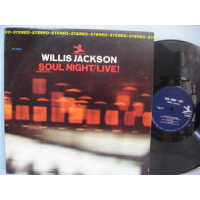
Willis “Gator” Jackson originally established himself as a honking R&B tenor saxophonist before modifying his style and becoming a success in hard bop/soul-jazz. Jackson was born in Florida, where he played as a teen- ager with the celebrated trumpeter Fats Navarro and other future jazz stars. He turned down offers of employment from Lionel Hampton and Andy Kirk in order to complete a college education at Florida A&M. Jackson initially played locally until he got his big break and joined Cootie Williams in 1948. Jackson was showcased honking and screaming throughout the two-sided recording “Gator Tail” which earned him the nickname of “Gator” and led to him making his first records as a leader in 1950. Willis Jackson was a popular attraction in the R&B field throughout the first half of the 1950s before rock and roll took over. He was married to Ruth Brown and appeared on many of her recordings of the era. Besides backing Ruth on many of her hits, he became a regular Atlantic session musician and also recorded under his own name. But by 1959 he had wisely altered his approach, eliminating some of the more excessive shrieks but still playing in a highly expressive style that fit in well with organ combos and in soul-jazz settings. During 1959-1968, Jackson recorded constantly for Prestige, making a couple of dozen albums. Among the sets that are currently available are “Please Mr. Jackson,” “Legends of Acid Jazz,” “Keep on a Blowin,” “Gentle Gator,” “At Large,” “Gravy,” “Soul Night Live, With Pat Martino,” and “Nuther’n Like Thuther’n.” Several of these CDs feature guitarist Pat Martino when he was a talented teenager. In the late 70s he led a tenor-organ combo featuring Carl Wilson (organ), and Pat Martino (guitar). He enjoyed a long and fruitful association with the organist Jack McDuff. In his last years Jackson was heard frequently at various Harlem nightspots and at the West End Cafe near Columbia University, where he traded solos with George Kelly, an early friend from Miami, in a band called Two Tenor Boogie. Willis Jackson continued playing in prime form up to the time of his 1987 death. Willis Jackson left an imposing legacy of recordings covering all of his active period from 1950 up through the ‘80’s. Many are still available and are prime examples of high energy soul jazz played by one of its masters.
Source: James NadalTags
Willis Jackson w/ Pat Martino: Gravy
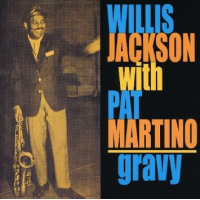
by Derek Taylor
A celebrity in Rhythm & Blues circles since his late teens Willis Jackson fought an uphill battle trying to earn acceptance among the jazz intelligentsia. He and many of his peers including King Curtis and Fred Jackson were saddled with the barwalker stigma from the moment they tried to establish themselves as serious improvisers. Dates like the two collected on this Prestige two-fer were often a double-edged prospect for while they afforded Jackson the chance to prove his chops they ...
read more
Ruud de Vries
saxophone, tenor
Zock Organ Trio
band / ensemble / orchestraPhotos
Music

Similar

Jimmy Smith
organ, Hammond B3
Cannonball Adderley
saxophone
Grant Green
guitar
Coleman Hawkins
saxophone, tenor
Houston Person
saxophone, tenor
Dr. Lonnie Smith
organ, Hammond B3
Lou Donaldson
saxophone
Eddie "Lockjaw" Davis
saxophone, tenor
Hank Crawford
saxophone, alto
Jimmy McGriff
organ, Hammond B3
Stanley Turrentine
saxophone, tenor
Ike Quebec
saxophone, tenor
Gene Ammons
saxophone, tenor
Eddie "Cleanhead" Vinson
saxophone, alto
David "Fathead" Newman
saxophone, tenor
Richard "Groove" Holmes
organ, Hammond B3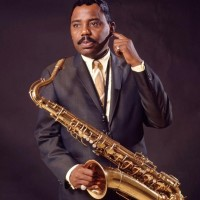
Willis "Gator" Jackson
Instrument: Saxophone, tenor
Born: April 25, 1932
Died: 1987



